



A complete timeline of Trump's tariff implementation strategy across the globe
From steel to semiconductors, the president has imposed duties on countries, with more set to take effect Aug 1
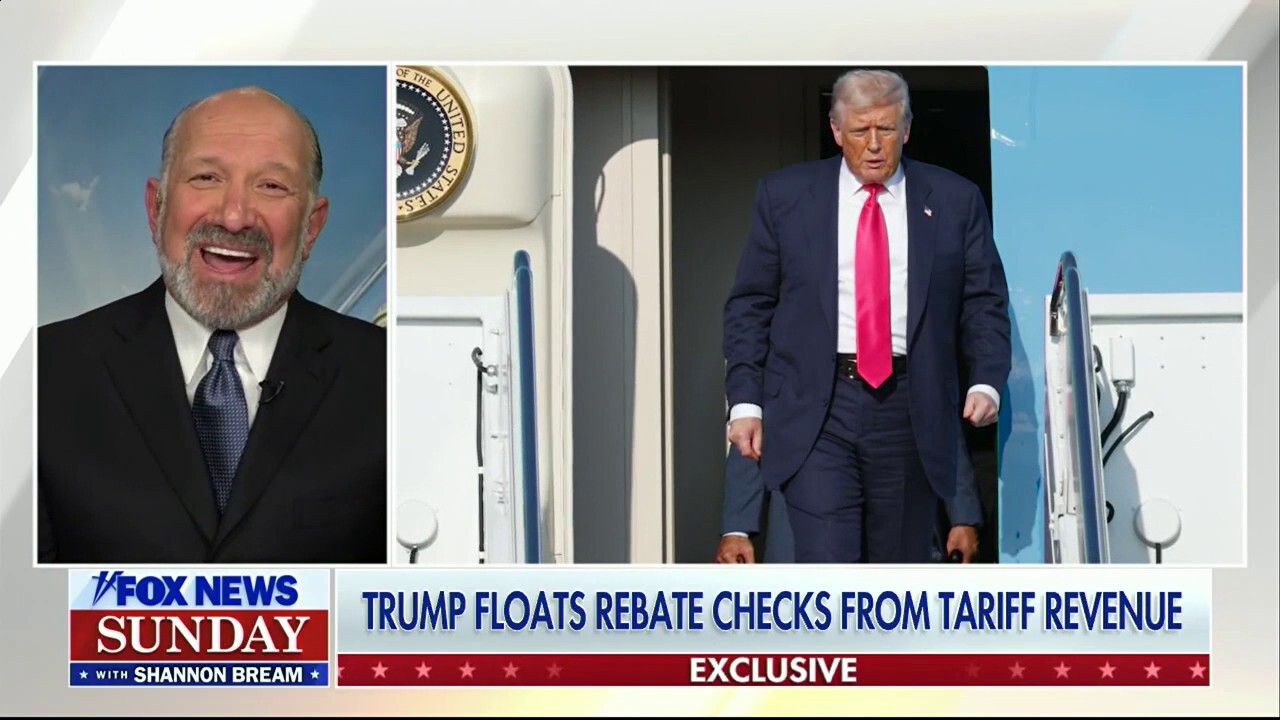
Sec. Lutnick touts Trump's 'fantastic' tariff plan as Aug. 1 deadline approaches
Commerce Secretary Howard Lutnick joins 'Fox News Sunday' to weigh in on President Donald Trump's tariff plan, a potential EU deal and requirements for TikTok to remain in the U.S. through American ownership.
As President Donald Trump's Aug. 1 deadline approaches for a slew of trade deals, here's a look at where U.S. tariffs stand and how they unfolded across the globe.
From steel to semiconductors, here's a look at Trump's global tariff rollout thus far.
Timeline:
Feb. 1: Trump signs an executive order to impose 10% tariffs on China and 25% tariffs on both Mexico and Canada. The executive order cited a national emergency over fentanyl smuggling and illegal immigration.
Feb. 3: Trump announces a 30-day pause on 25% tariffs on Mexico and Canada.
Feb. 4: The 10% tariffs on all Chinese imports come into effect.
Feb. 10: Trump unveils plans to place a 25% tariff on steel and aluminum imports.
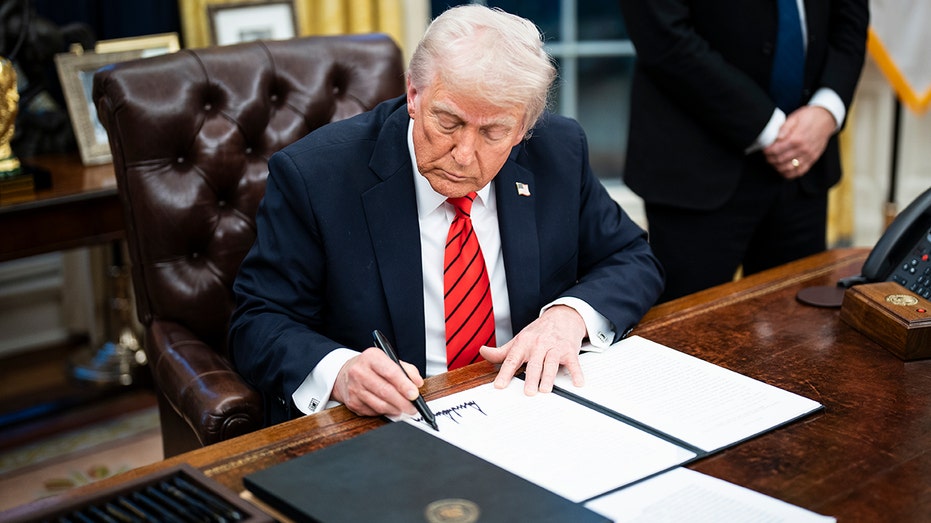
President Donald Trump signed executive orders imposing 25% tariffs on imported steel and aluminum. (Jabin Botsford/The Washington Post via Getty Images / Getty Images)
Feb. 13: The president signs a plan for the U.S. to look at implementing "reciprocal" tariffs against countries that tax or limit American imports.
Feb. 25: Trump orders a tariff probe into copper imports, signaling a potential trade announcement.
March 4: Trump imposes an additional 10% tariff on Chinese goods, bringing the levy up to 20%. Separately, the 25% tariffs on Mexico and Canada take effect.
March 5: Following a meeting with automaker leaders Ford, General Motors and Stellantis, Trump grants a 30-day exemption on goods from Mexico and Canada.
March 12: The 25% tariffs on steel and aluminum take effect.
March 13: Trump threatens to impose a 200% tariff on European wines and spirits. The sky-high duty follows the European Union's move to place a 50% levy on American whiskey.
FROM BOURBON TO BORDEAUX: TRUMP'S TARIFFS SPILL INTO GLOBAL BOOZE MARKETS
March 24: Trump says he will place a 25% tariff on all imports from any nation that purchases Venezuelan oil or gas.
April 2: During a "Liberation Day" event, Trump announces a 10% universal tariff on all imports and "reciprocal" tariffs for a slew of countries.
Trump is just getting started with global tariffs: Rep. Byron Donalds
Florida gubernatorial candidate Rep. Byron Donalds explains why President Donald Trump's tariff plan will work for the American people on 'Varney & Co.'
April 3: A 25% tariff on foreign-made cars comes into effect.
April 5: A 10% universal tariff on nearly all countries also takes effect.
April 9: Trump's higher "reciprocal tariffs" begin just after midnight. Hours later, the president says he is issuing a 90-day pause on those duties, except for China. Trump raises tariffs on Chinese goods from 104% to 145%, the highest rate so far this year.
April 14: Trump says he is considering temporarily exempting the U.S. auto industry from tariffs, citing potential negative impacts on supply chains.
The president orders a probe into imports of computer chips and pharmaceuticals.
May 3: A 25% duty on auto parts comes into play.
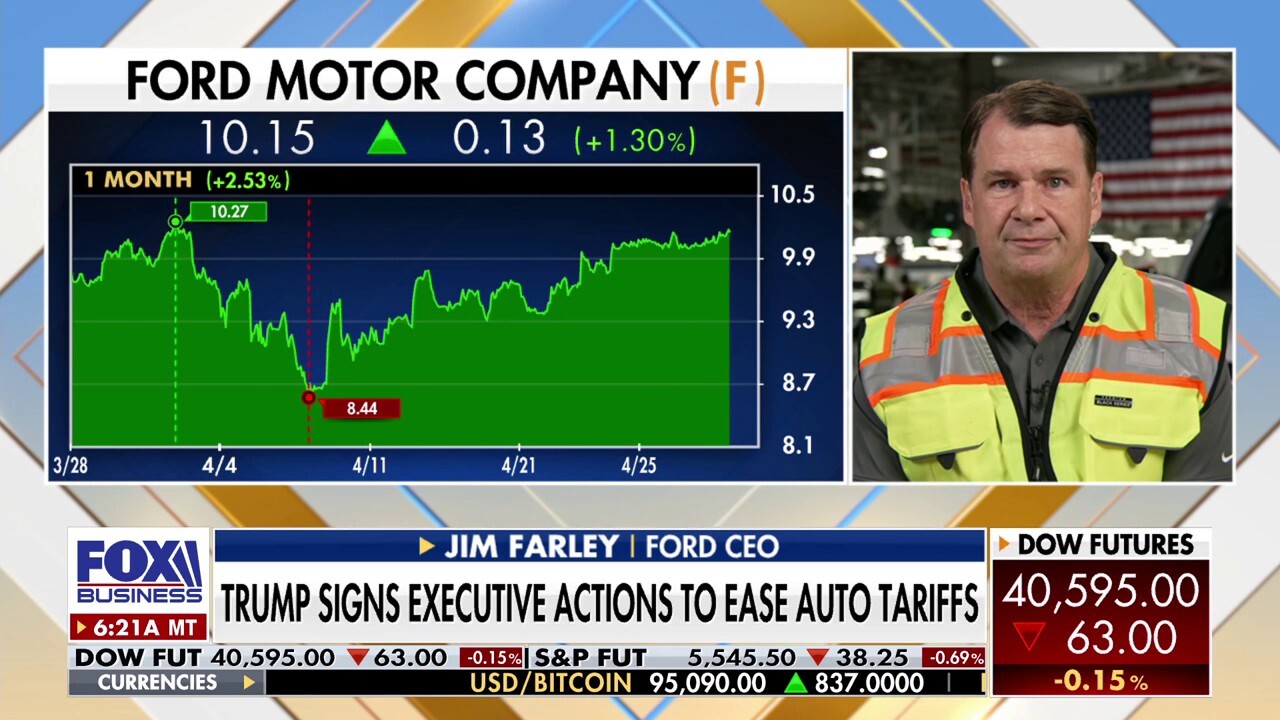
Ford CEO Jim Farley reacts after Trump softens tariff blow for automakers: 'Right thing to do'
Ford CEO Jim Farley on his company's commitment to American manufacturing and his reaction to President Donald Trump's auto tariff relief.
May 4: Trump turns to Hollywood in his latest tariff threat and proposes a 100% duty on foreign-produced films.
May 8: The U.S. and U.K. announce a trade deal. Trump keeps a 10% minimum duty on U.K. goods in place.
May 12: Washington and Beijing agree to roll back tariffs for 90 days while their trade negotiators meet in Geneva. The U.S. brought tariffs from 145% down to 30%. Meanwhile, China dropped its 125% tariffs on U.S. goods to 10%.
A BREAKDOWN OF THE COUNTRIES FACING TRUMP'S TARIFFS
May 23: Trump says he will place a 25% tariff on all Apple products if the tech titan does not agree to make its iPhones in the U.S.
The president said he is also considering a potential 50% duty on European Union imports beginning June 1.
May 25: Following a discussion with EU Commission President Ursula von der Leyen, Trump says he will delay tariffs until July 9.
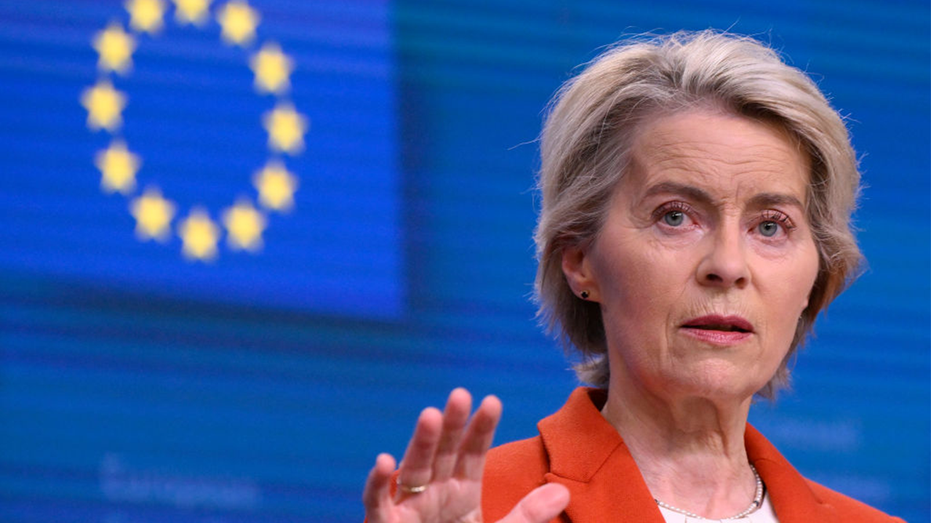
European Commission President Ursula von der Leyen addresses a press conference at the end of an EU summit in Brussels on Oct. 17, 2024. (Getty Images / Getty Images)
May 28: A U.S. federal court blocks some of Trump's tariffs. Within a few hours, the administration filed an appeal.
May 29: In an apparent victory for Trump, a U.S. federal appeals court allows the tariffs to remain in place while the legal process unfolds.
June 4: Tariffs on steel and aluminum double to 50%.
July 2: Trump announces a trade agreement with Vietnam. The deal puts a 20% tariff on Vietnamese exports to the U.S. and 40% duty on transshipping. The levy on transshipping applies to goods that were made in other countries and then sent to Vietnam as a hub for export. All U.S. goods exported to Vietnam will have zero tariffs applied.
July 7: The White House announces that it will extend the reciprocal tariffs pause from July 9 to Aug. 1.
Goods from South Korea and Japan are subject to a 25% import tax, according to trade letters Trump posted on social media.
Additionally, Trump said he would impose a 10% tariff on countries that "align themselves with the anti-American policies of BRICS." The BRICS alliance includes Brazil, Russia, India, China, South Africa as well as Indonesia, Iran, Egypt, Ethiopia and the United Arab Emirates.
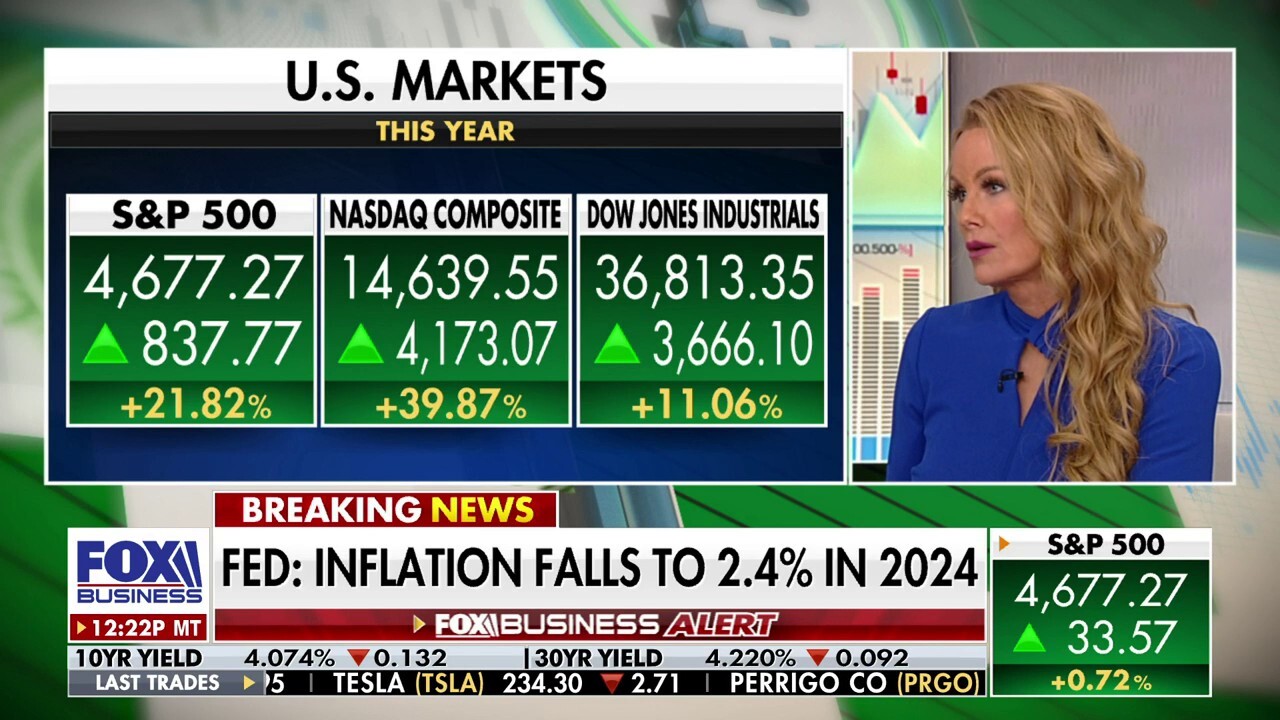
BRICS nations are the greatest threat to the US dollar: Rebecca Walser
Walser Wealth Management President Rebecca Walser discusses what role politics plays in the Fed's rate cut decision on 'Making Money.'
July 8: The president pledges a 50% tariff on copper imports.
July 9: Trump announces a 50% tariff on Brazilian goods. The president singled out Brazil partly in retaliation for the ongoing prosecution of the country’s former president, Jair Bolsonaro.
WHITE HOUSE SAYS CANADA HAS BEEN 'DIFFICULT' AS TRADE DEADLINE LOOMS
July 10: The president announces in a Truth Social post that he will impose a 35% tariff on Canada due to Ottawa's failure to stop the flow of fentanyl into the U.S.
July 12: Trump says the U.S. will place a 30% tariffs on the EU and Mexico in separate letters shared on Truth Social. The new levies are slated to take place on Aug. 1.
July 21: Treasury Secretary Scott Bessent says he will travel to Stockholm next week for two days of trade talks with representatives from China. While most trade agreements carry an Aug. 1 deadline, the U.S. and China have until Aug. 12.
Bessent said the Aug. 12 date will likely be extended.
CHINA’S OIL TIES WITH RUSSIA AND IRAN ARE TRADE FLASHPOINTS, US SAYS
Trump said he was considering a meeting with Chinese President Xi Jinping in the "not-too-distant future."
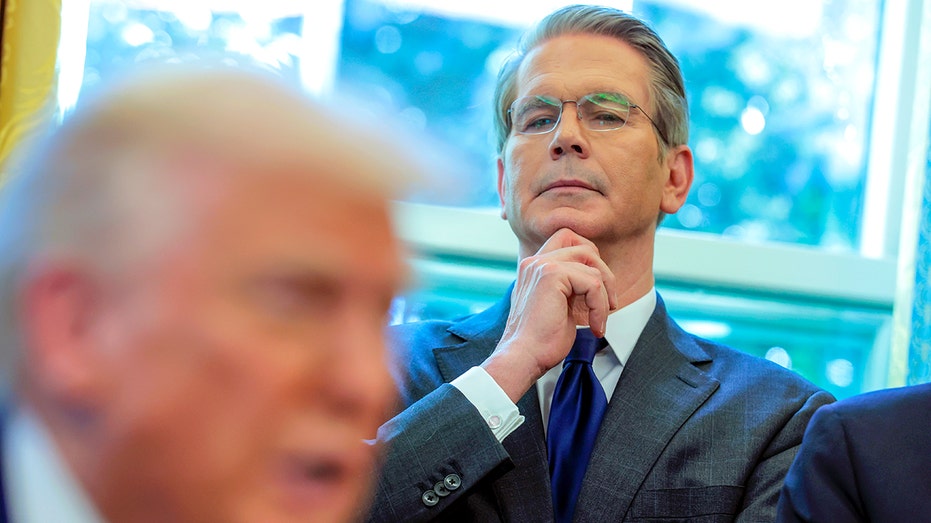
Treasury Secretary Scott Bessent looks on as U.S. President Donald Trump signs executive orders in the Oval Office of the White House on April 09, 2025 in Washington, DC. (Anna Moneymaker/Getty Images / Getty Images)
July 22: Trump announces "perhaps the largest deal ever made" with Japan. The agreement includes a $550 billion Japanese investment in the United States. The deal also sets a 15% tariff on Japanese imports.
Following a meeting with President Ferdinand Marcos Jr. of the Philippines, Trump said a 19% tariff will be placed on the island country's exports. American goods shipped to the Philippines will not be charged a tariff.
Trump said U.S. products sent to Indonesia will not have a tariff, while Indonesian exports will face a 19% duty.
July 27: Trump announces a trade deal with the European Union following a meeting with EU Commission President Ursula von der Leyen in Scotland. The two leaders agreed to a 15% tariff on imported goods.
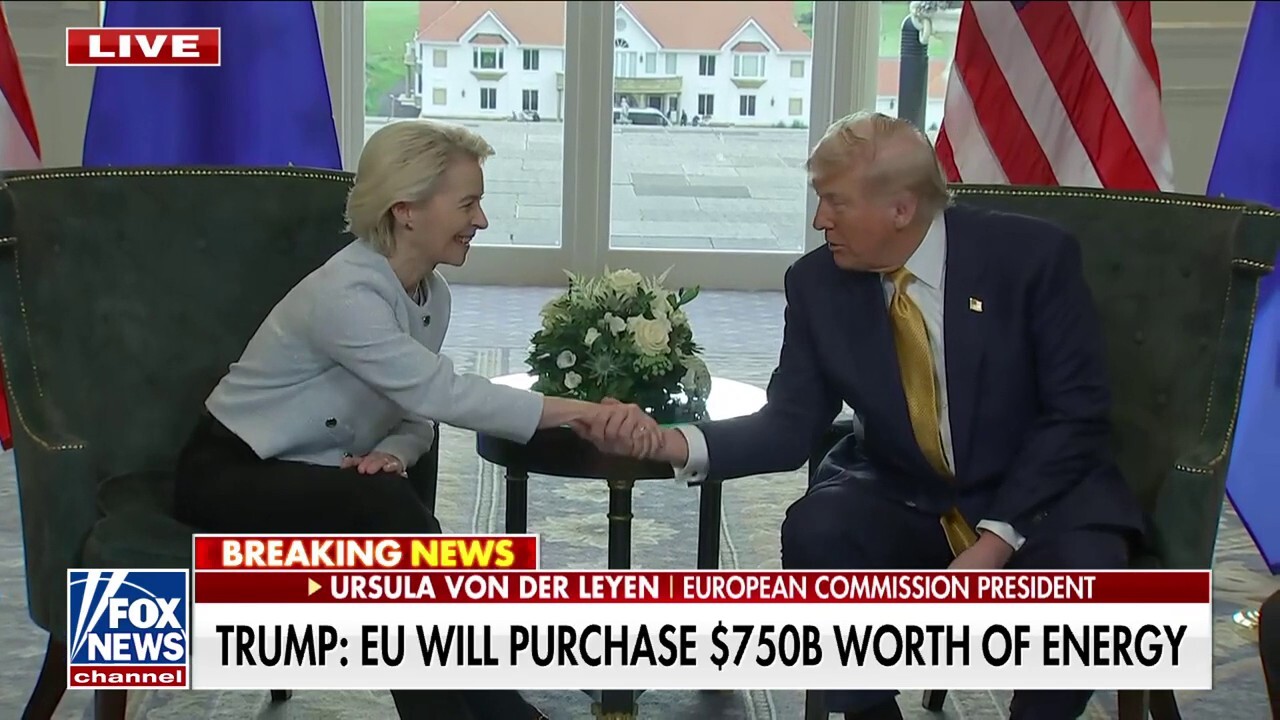
Trump unveils massive trade deal with European Union
President Donald Trump announces a trade deal between the United States and the European Union with European Commission President Ursula von der Leyen.
Von der Leyen said Europe will also purchase $150 billion worth of U.S. energy and invest $600 billion in the U.S. economy.
Commerce Secretary Howard Lutnick said the Trump administration will not extend or delay any trade agreements as the deadline approaches its final days.
July 30: Trump announces a 25% tariff on India citing "obnoxious" trade policies and a "massive trade deficit."
Later in the day, Trump said he reached an agreement with South Korea for a 15% tariff on goods entering the U.S. Earlier in the month, Trump initially set the tariff rate at 25%.
SOUTH KOREA TO INVEST $350B IN US UNDER NEW TRUMP TRADE AGREEMENT
Separately, the president announced a trade deal with Pakistan, in which the two countries will work together to develop oil reserves.
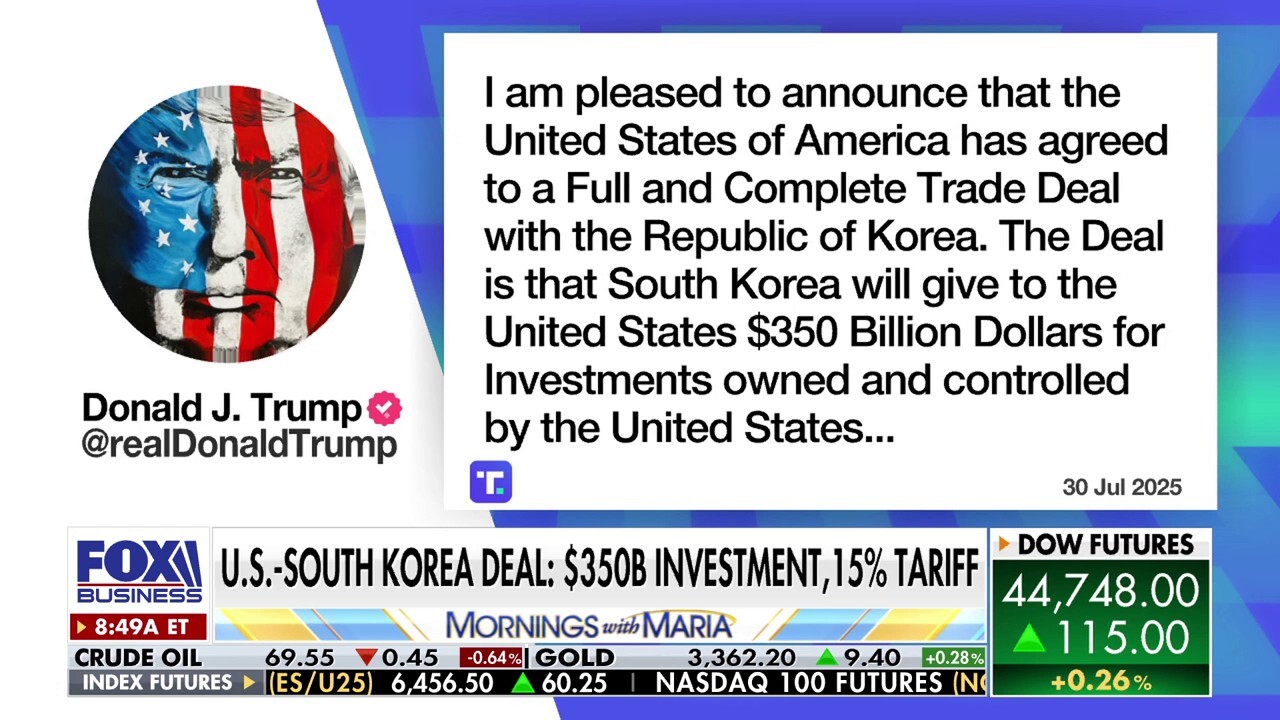
Expert predicts 'renaissance of investing' after Trump strikes deal with South Korea
Andreessen Horowitz General Partner Katherine Boyle joins 'Mornings with Maria' to discuss President Donald Trump's trade deal with South Korea and imposing secondary tariffs on countries purchasing Russian oil.
July 31: Following a phone call with Mexico's president, Trump said the two decided to extend the Aug. 1 deadline by 90 days in order to hold additional trade talks. That puts the new deadline to reach an agreement with Mexico at the end of October.
Trump raised import tariffs on goods from Canada to 35%, signaling a widening rift with America’s second-largest trading partner.
Trump signed an executive order that moved the tariff rates from taking effect on Aug. 1 to Aug. 7.
Aug. 3: Dominic LeBlanc, Canada’s lead on U.S. trade relations, said Prime Minister Mark Carney is likely to speak with Trump "over the next number of days" as the two countries work to resolve a trade impasse.