Stock market waits on trade deals, Trump progress in Middle East and inflation data: Live Updates
Investors eye more trade deals, updates from President Trump’s trip to the Middle East and fresh consumer inflation data after U.S. stocks soared Monday as investors celebrated major progress on U.S.-China trade talks. The Dow is officially out of correction territory, while the Nasdaq Composite began a fresh bull market. FOX Business is providing real-time updates on the markets, commodities and all the most active stocks on the move.
Coverage for this event has ended.
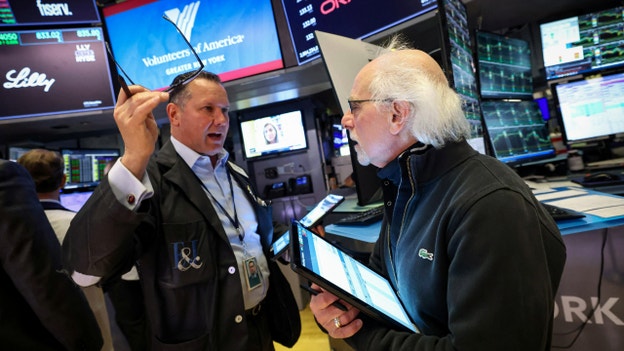
Traders work on the floor of the New York Stock Exchange in New York City. (Reuters)
Stocks finished mostly higher on Tuesday, extending the prior session's rally, on softer inflation data and trade optimism.
The Dow Jones Industrial Average closed 269.67 points, or 0.64%, higher, while the S&P 500 and Nasdaq Composite rose 0.72% and 1.61%, respectively.
The Bureau of Labor Statistics on Tuesday said that the consumer price index (CPI) – a broad measure of how much everyday goods like gasoline, groceries and rent cost – rose 0.2% in April compared with last month, while it was up 2.3% on an annual basis. The annual inflation rate was the lowest since February 2021.
Both of those figures were slightly cooler than the estimates of economists polled by LSEG, who predicted a monthly figure of 0.3% and annual inflation of 2.4%. The rise in monthly inflation comes after an unexpected decline in March, when it fell 0.1%. Headline inflation was unchanged in April.
Stocks surged on Monday after the U.S. and China agreed to roll back tariffs for a 90-day period.
The Dow Jones Industrial Average rose 1,160.72 points, or 2.81%, exiting correction territory. The S&P 500 climbed 3.26% and the Nasdaq Composite rose 4.35%, exiting bear market territory.
The tariffs President Donald Trump announced against China on April 2 are being cut by 24 percentage points for this temporary period while retaining the remaining ad valorem rate of 10% from that announcement, according to a joint statement.
China agreed to the same stipulations, adding that it will "adopt all necessary administrative measures to suspend or remove the non-tariff countermeasures taken against the United States since April 2," the announcement stated.
The S&P 500, the broadest measure of the U.S. stock market, is back to early April levels after a sharp selloff, driven by President Trump's tariff push, sent it into a correction.
After emerging from that correction on April 24, the index is still down about 4% from its record 6,144 reached February 19, 2025.
Over the past month, tech stocks have been the biggest driver, followed by industrials and consumer discretionary.
| Symbol | Price | Change | %Change |
|---|---|---|---|
| XLK | $233.12 | 5.42 | 2.38 |
| XLI | $141.72 | 1.42 | 1.01 |
| XLY | $215.95 | 3.48 | 1.64 |
| XLV | $132.95 | -3.01 | -2.21 |
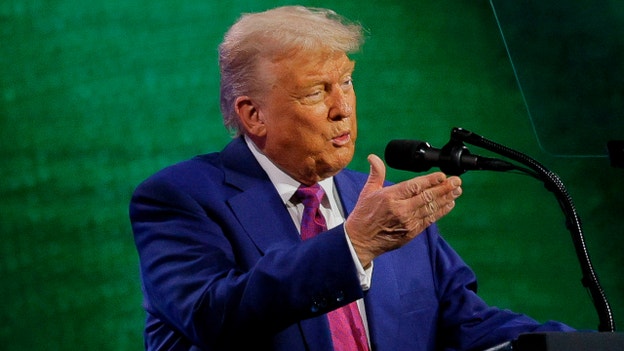
U.S. President Donald Trump attends the Saudi-U.S. Investment Forum, in Riyadh, Saudi Arabia. (Reuters)
President Donald Trump on Tuesday touted his administration's economic policies in a speech delivered in Saudi Arabia.
The president is traveling through the Middle East this week in an effort to attract more investment in the U.S. economy.
"Most importantly for the people in this room, the days of economic misery under the last administration are rapidly giving way to the greatest economy in the history of the world," Trump said.
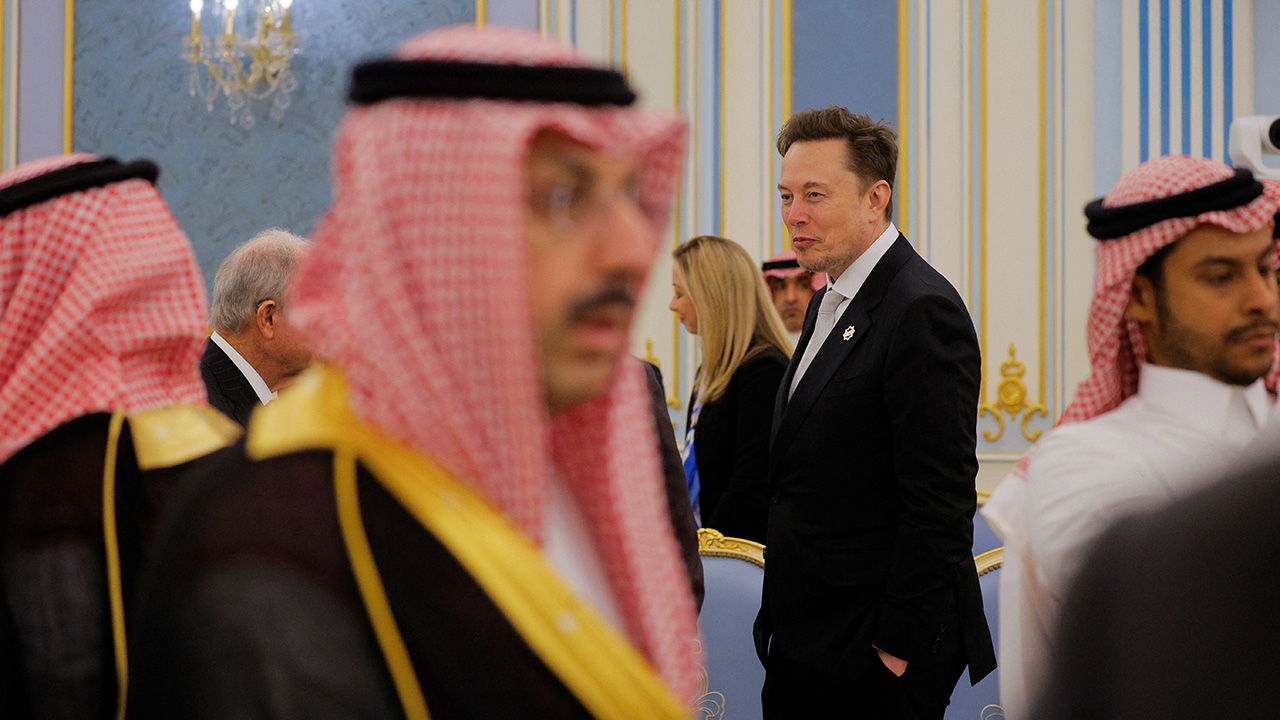
President Trump has officially arrived in the Middle East. POTUS was greeted by Saudi Crown Prince Mohammed bin Salman (MBS) -- SEE IT HERE.
Moments ago the U.S. signed a strategic partnership with the country...
"Today in Saudi Arabia, President Donald J. Trump announced Saudi Arabia’s $600-billion commitment to invest in the United States, building economic ties that will endure for generations to come. The first deals under the announcement strengthen our energy security, defense industry, technology leadership, and access to global infrastructure and critical minerals" the White House announced.
MBS said he is looking forward to working with the U.S. on security and the future of the oil industry.
U.S. business leaders want in on any potential deals and partnerships.
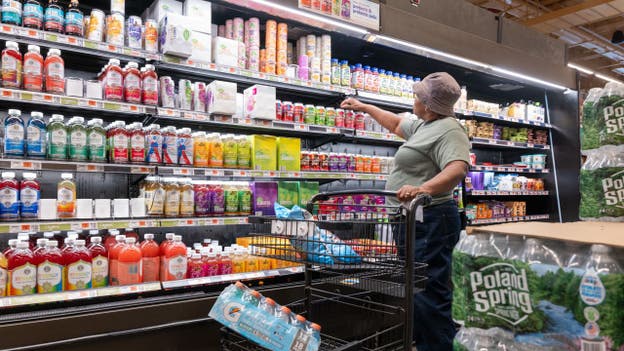
A shopper at a grocery store. (Getty Images)
Inflation rose slightly in April and remained above the Federal Reserve's target rate as the economic impact of higher tariffs is expected to impact consumer prices in the coming months.
The Bureau of Labor Statistics on Tuesday said that the consumer price index (CPI) – a broad measure of how much everyday goods like gasoline, groceries and rent cost – rose 0.2% in April compared with last month, while it was up 2.3% on an annual basis. The annual inflation rate was the lowest since February 2021.
Both of those figures were slightly cooler than the estimates of economists polled by LSEG, who predicted a monthly figure of 0.3% and annual inflation of 2.4%. The rise in monthly inflation comes after an unexpected decline in March, when it fell 0.1%. Headline inflation was unchanged in April.
This is an excerpt from an article by FOX Business' Eric Revell
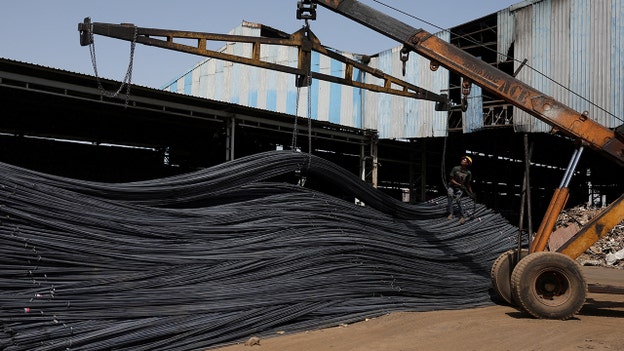
A laborer unloads TMT steel bars from a crane inside a steel bar manufacturing factory at Viramgam, in the western Indian state Gujarat, India, April 7, 2025. REUTERS/Amit Dave/File Photo
India is considering placing tariffs on some goods produced in the U.S. to counter the Trump administration's duties on steel and aluminum products, according to a document submitted to the World Trade Organization.
"The proposed suspension of concessions or other obligations takes the form of an increase in tariffs on selected products originating in the United States," the document dated Monday reads.
The document did not disclose what kind of products may be slapped with tariffs, though it did state that the potential countermeasures would impact $7.6 billion worth of products made in India that are imported into the U.S.
In March, the Trump administration put 25% levies on steel and aluminum imports, which were an extension of duties first imposed during U.S. President Donald Trump's first administration.
The two countries are working to secure a trade deal, with India, the world's second-largest producer of crude steel, offering to cut its tariff gap with the U.S. by two-thirds.
This is an excerpt from an article by Fox Business’ Landon Mion. To read more, click here.
A Boeing logo is seen at the 54th International Paris Airshow at Le Bourget Airport near Paris, France, June 18, 2023. REUTERS/Benoit Tessier/File Photo
China has removed its ban on airlines accepting Boeing planes after Beijing and Washington agreed to temporarily reduce the steep tariffs on one another, according to a report.
Officials in China have begun notifying domestic carriers and government agencies this week that they may resume deliveries of aircraft produced in the U.S., Bloomberg News reported, citing sources familiar with the matter.
Last month, at least three jets at Boeing's delivery center in China were returned to the U.S. Boeing said customers in China would not accept delivery of new planes in response to tariffs imposed by the Trump administration. Because of this, the plane maker said it was seeking to resell potentially dozens of aircraft.
China represents about 10% of Boeing's commercial backlog, and it is an important and growing aviation market.
This is an excerpt from an article by Fox Business’ Landon Mion. To read more, click here.
Stocks soared Monday amid news of a 90-day pause on U.S.-China tariffs, and former Trump economic advisor Stephen Moore believes it could be the start of a financial revolution.
"I'm not a big tariff guy. I'm much more in favor of free trade and lower tariffs," Moore said Monday on "Varney & Co."
However, if Trump can "pull off" his effort to strike trade deals that benefit the U.S., Moore sees justification for the method.
"It looks right now like he's succeeding," he added, pointing to stocks.
This is an excerpt from an article by Fox Business’ Taylor Penley. To read more, click here.
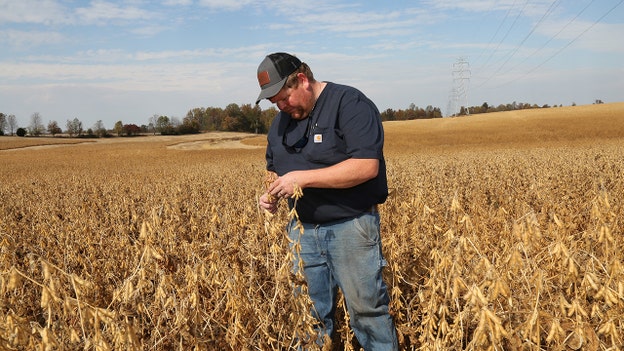
Caleb Ragland, a grain and soy grower and president of the American Soybean Association, looks at soybean pods on his farm in Magnolia, Kentucky, U.S., in this undated handout picture. American Soybean Association/Handout via REUTERS
Farmers in the U.S. will still struggle with soybean sales in China even though Washington and Beijing reached a truce in their tariff standoff, American producers said.
American farmers told Reuters on Tuesday that Brazil, the top soybean supplier, still holds a competitive price advantage despite the tariff pause between the U.S. and China.
"The tariff that remains in place for U.S. soy is far from inconsequential," Kentucky farmer Caleb Ragland, who is president of the American Soybean Association, told the outlet. "Products purchased from our competitors in Brazil and Argentina are not burdened with this extra cost."
On Monday, the U.S. and China announced a 90-day tariff pause. The U.S. will temporarily lower its tariffs on Chinese goods from 145% to 30%, and China will reduce its levies on American products from 125% to 10%.
Dan Henebry, a corn and soy grower in Buffalo, Illinois, told the outlet that China would only buy from the U.S. if its suppliers in South America come up short, lamenting that American farmers are back at square one.
"It doesn't appear that we solved anything after that turmoil," Henebry said. "We're right back at the baseball plate trying to see if we're going to hit a home run or strike out again."
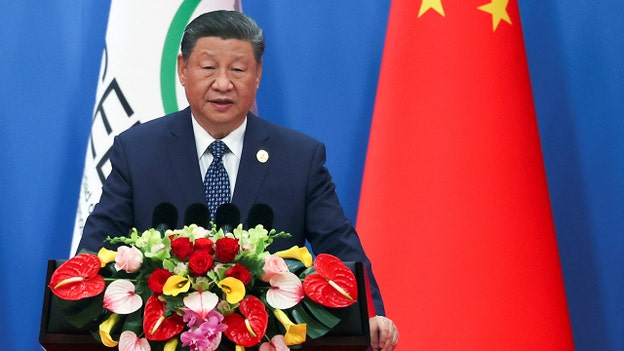
China's President Xi Jinping delivers a speech during the opening ceremony for the China-CELAC Forum ministerial meeting in Beijing, China May 13, 2025. REUTERS/Florence Lo/Pool
China’s President Xi Jinping said “bullying” and “hegemonism” will ultimately fail in a subtle swipe at President Donald Trump and U.S. tariff policies a day after the world’s two largest economies agreed to a 90-day truce in their tariffs standoff.
The Chinese leader spoke to officials from China and Latin America on Tuesday, reiterating Beijing’s view that “bullying or hegemonism only leads to self-isolation.”
“There are no winners in tariff wars or trade wars,” Xi said, a phrase that China has often used when speaking of Trump's trade policies.
The U.S. and China announced on Monday that tariffs against one another will be reduced for a 90-day period after officials held trade negotiations in Geneva, Switzerland.
Under the deal, reciprocal tariffs for both countries would be reduced by 115%. The U.S. will temporarily lower its tariffs on Chinese goods from 145% to 30%, and China will reduce its levies on American products from 125% to 10%.
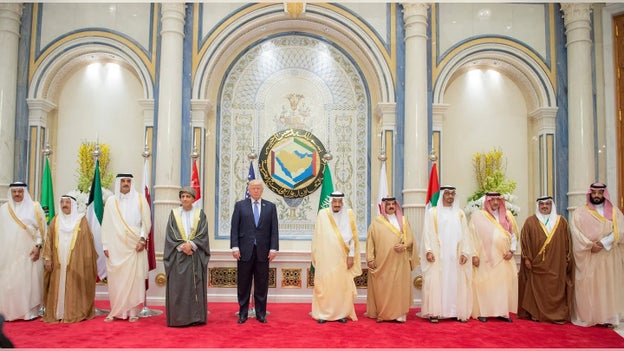
President Donald Trump made a historic visit to Saudi Arabia early in his first term in 2017. (Bandar Algaloud/Courtesy of Saudi Royal Court/Handout via REUTERS)
President Donald Trump is embarking this week on a high-stakes tour of the Persian Gulf region, targeting business deals and strategic partnerships with three oil-rich nations: Saudi Arabia, the United Arab Emirates and Qatar.
The trip marks Trump's first major foreign visit of his new term and comes as nuclear negotiations with Iran drag on and as war continues between Israel and the Palestinian terror organization, Hamas, in the Gaza Strip. While business is the official focus, the backdrop is anything but calm.
White House press secretary Karoline Leavitt described the mission as part of Trump’s broader vision that "extremism is defeated [through] commerce and cultural exchanges."
This is an excerpt from an article by FOX Business' Morgan Phillips.
Coinbase, one of the leading crypto exchanges, is being added to the S&P 500, the broadest measure of the U.S. stock market, effective Monday May 19, 2025.
It will replace Discover Financial, according to S&P Global which announced the switch-up late Monday without providing specifics.
The decision, usually based on market value, historically gives a boost to the added stock as fund managers who mirror the S&P 500 need to add some stock to their holdings.
| Symbol | Price | Change | %Change |
|---|---|---|---|
| COIN | $207.22 | 7.90 | 3.96 |
| DFS | $202.47 | 12.40 | 6.52 |
Cryptos, along with stocks, have been recovering, with Bitcoin, the largest crypto by market value, back above the $100,000 level.
| Symbol | Price | Change | %Change |
|---|---|---|---|
| I:DJI | $42,410.10 | 1,160.72 | 2.81 |
| SP500 | $5,844.19 | 184.28 | 3.26 |
| I:COMP | $18,708.34 | 779.43 | 4.35 |
Stocks surged on Monday after the U.S. and China agreed to roll back tariffs for a 90-day period. The Dow Jones Industrial Average rose 1,160.72 points, or 2.81%, exiting correction territory. The S&P 500 climbed 3.26% and the Nasdaq Composite rose 4.35%, exiting bear market territory.
The tariffs President Donald Trump announced against China on April 2 are being cut by 24 percentage points for this temporary period while retaining the remaining ad valorem rate of 10% from that announcement, according to a joint statement. China agreed to the same stipulations, adding that it will "adopt all necessary administrative measures to suspend or remove the non-tariff countermeasures taken against the United States since April 2," the announcement stated.
Under the deal, reciprocal tariffs for both countries would be reduced by 115%. The U.S. will temporarily lower its tariffs on Chinese goods from 145% to 30%, and China will reduce its levies on American products from 125% to 10%.FOX Business Landon Mion contributed to this report
Live Coverage begins here