












Gingrich sends warning to Europe as US carries allies amid Iran conflict
Gingrich argues Europe has grown too reliant on American military leadership since World War II and must start doing its 'fair share.'
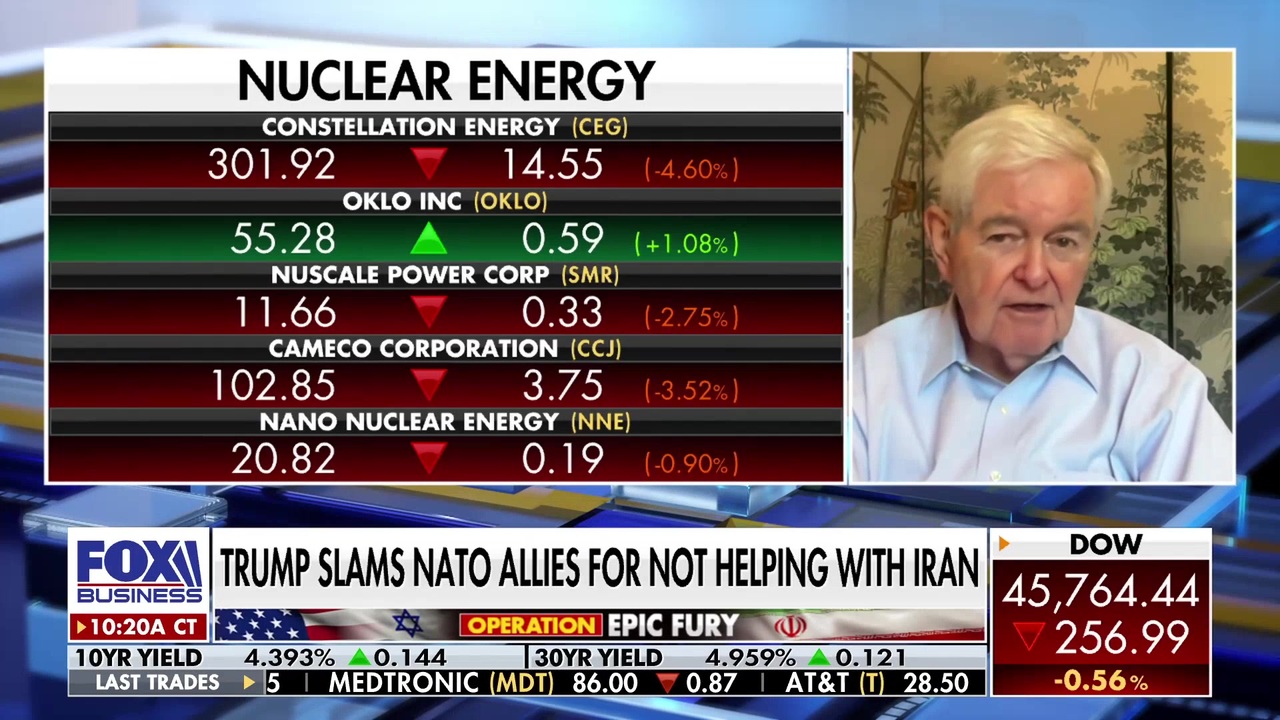
Gingrich slams Europe’s weak military support in Iran conflict
Fox News contributor Newt Gingrich joins ‘Varney & Co.’ to weigh in on the timeline for ending the Iran conflict, rising tensions with European allies and the potential effect on oil prices and the upcoming midterm elections.
European tensions are resurfacing as questions grow over burden sharing in global conflicts, and former House Speaker Newt Gingrich argued long-standing imbalances between the U.S. and its allies are becoming harder to ignore.
Fox News contributor Newt Gingrich joined FOX Business' Stuart Varney on "Varney & Co." to discuss the widening divide between the United States and Europe as the conflict in the Middle East continues to test international alliances.
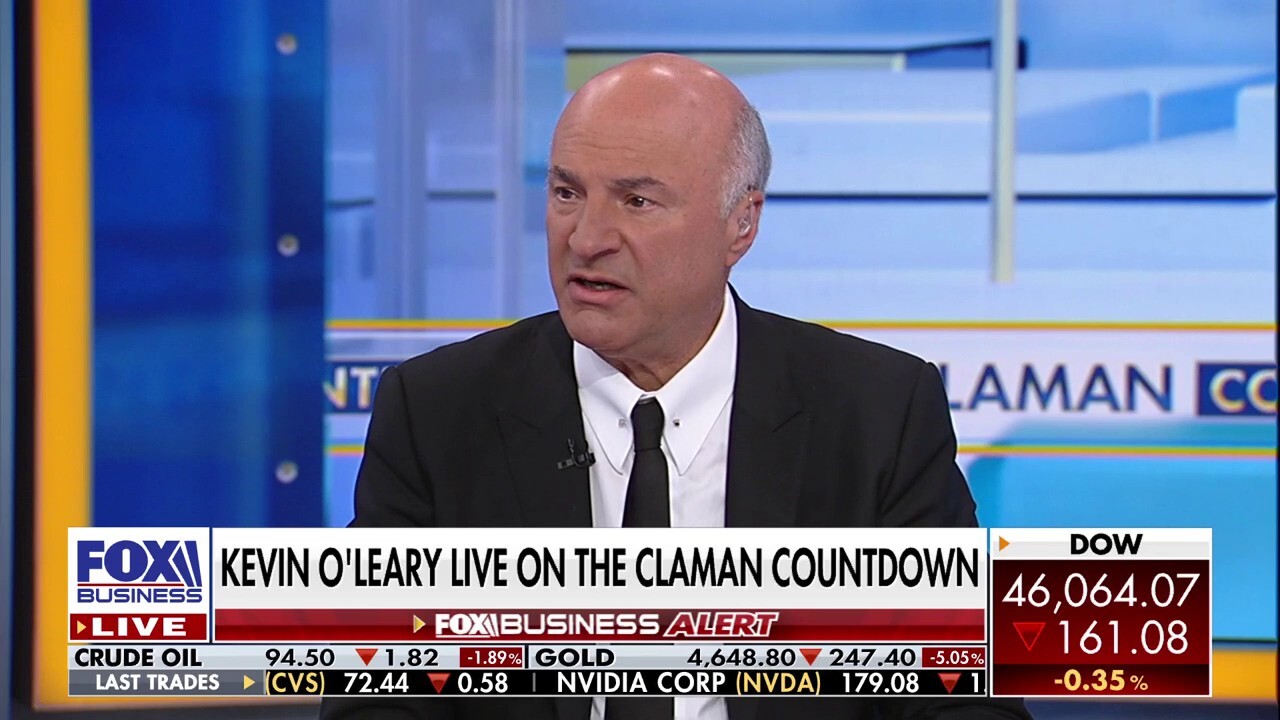
Kevin O’Leary predicts multinational policing of Strait of Hormuz post-Iran conflict
O’Leary Ventures Chairman Kevin O’Leary discusses the Iran War’s market impact, the collectibles market and more on ‘The Claman Countdown.’
Gingrich pointed to what he described as a fundamental disconnect in expectations, saying Europe has grown reliant on American leadership for decades.
"The fact that we protected Europe from having liberated it after World War II. We protected it all through the Cold War. We are still the primary protectors of Europe. They need to learn to do their fair share," Gingrich said.
KEVIN O'LEARY FORECASTS GLOBAL POWER SHIFT IN STRAIT OF HORMUZ AS IRAN CONFLICT RATTLES OIL MARKETS
As pressure builds around key global shipping routes, including the Strait of Hormuz, Gingrich suggested the burden of maintaining stability continues to fall largely on the U.S.
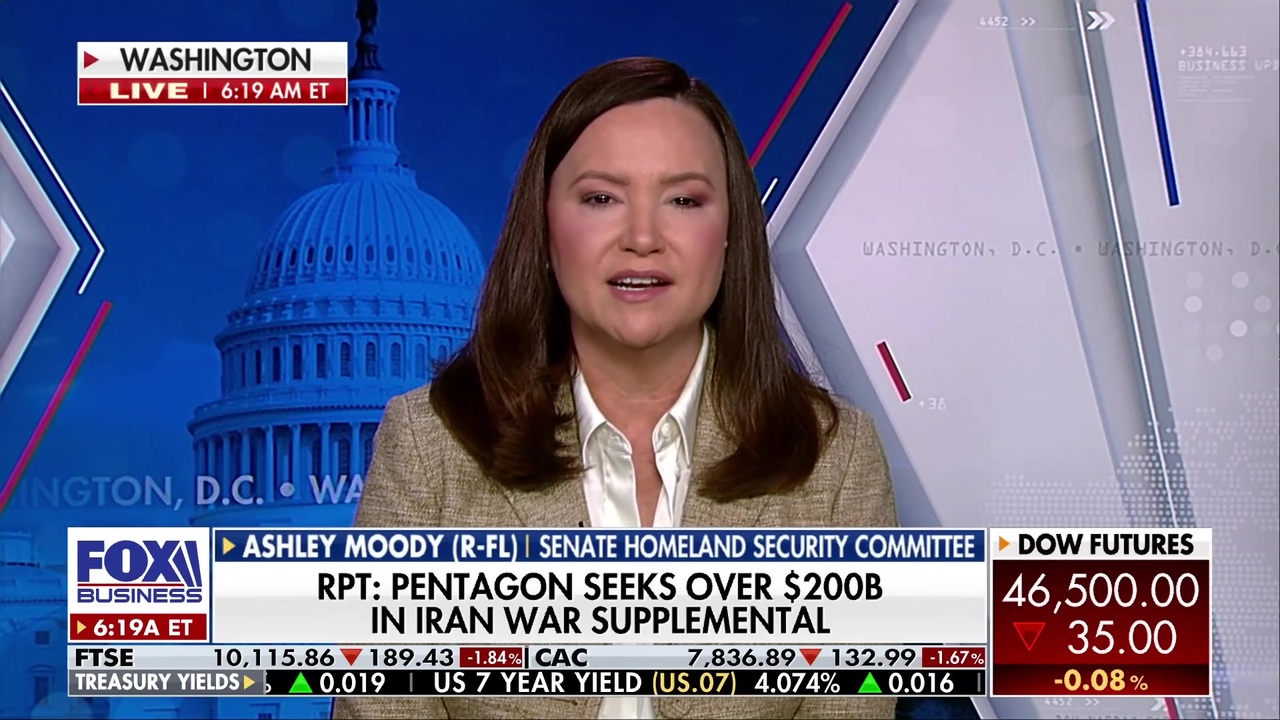
White House scrambles on energy crisis as Strait of Hormuz security fears rise
Sen. Ashley Moody, R-Fla., joins ‘Mornings with Maria’ to weigh in on a potential $200 billion Iran defense package, rising Middle East tensions and a heated Senate clash over DHS leadership.
"It may take a substantial campaign, but I think in two or three weeks, if we focus on it, we can break the back of the Iranian effort to close the Strait," Gingrich said.
He framed the issue as part of a broader philosophical divide, arguing that the U.S. is focused on innovation and forward momentum, while Europe leans more heavily on regulation.
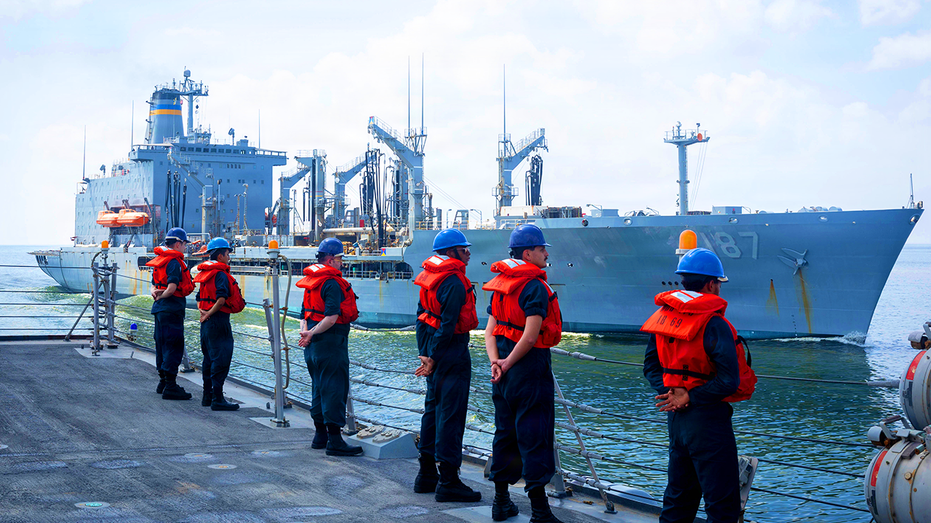
Members of the U.S. military on a missile destroyer during Operation Epic Fury (U.S. Navy via Getty Images / Getty Images)
"We think you're going to get to the future by innovation. They think you can hide from the future by regulation. It doesn't work," Gingrich said.
Despite calls for stronger allied coordination, Gingrich suggested Europe's military limitations mean its role would likely remain secondary.
CHINESE MISSILES TARGETING US NAVY COULD TRIGGER ‘OVERNIGHT’ WAR SHIFT, EXPERT WARNS
"It would be nice if they would help a little bit. It would make people feel better if they would help a little bit," he said.
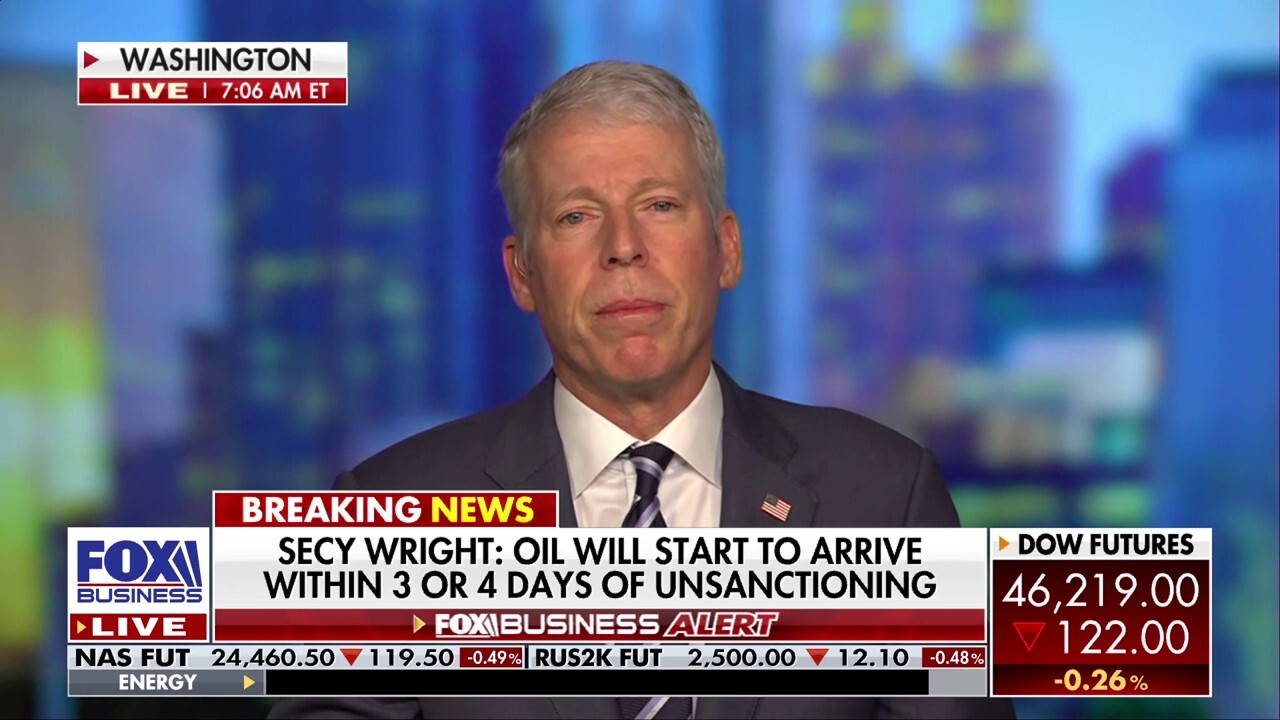
US may lift sanctions on 140M barrels of Iranian oil to stabilize markets
U.S. Energy Secretary Chris Wright joins ‘Mornings with Maria’ to discuss rising oil prices, Iran’s attacks in the Gulf and how the U.S. could release Iranian oil to stabilize global markets.
Still, he emphasized that the outcome of ongoing conflicts will ultimately hinge on U.S. and allied strength, not symbolic contributions.
"In the end, it's the American-Israeli coalition, which is gonna win this fight. ... Having one ship from France or one ship from Britain is not a very big contribution. ... The truth is, if you look at the British Navy right now, it is so underfunded, they can't do very much. They just don't have the capacity," Gingrich concluded.


