


US economy shed 92,000 jobs in February, well below expectations
Department of Labor releases closely watched February 2026 jobs report
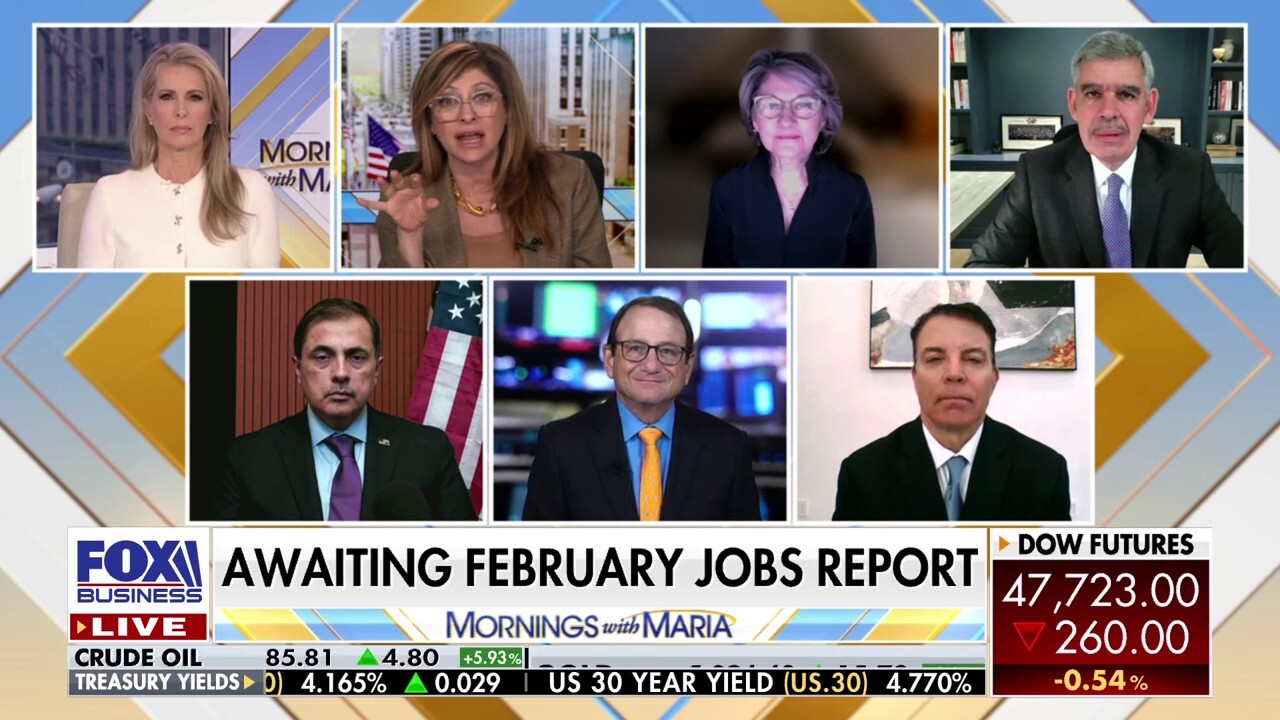
US economy loses 92,000 jobs in February
'Mornings with Maria' panel reacts to shocking February jobs miss as payrolls fall 92,000 and oil prices surge.
The U.S. economy shed jobs unexpectedly in February as employers pulled back to start 2026 amid economic uncertainty.
What are the key findings of the February 2026 jobs report?
The Labor Department on Wednesday reported that employers shed 92,000 jobs in February. That figure was well below the expectations of economists polled by LSEG, who estimated the economy would add 59,000 jobs.
The unemployment rate was 4.4%, slightly higher than economists' expectations of 4.3%.
Revisions were made to the payroll numbers for the prior two months, with December's report revised down by 65,000 jobs from a gain of 48,000 to a loss of 17,000, and January's report revised down by 4,000 from a gain of 130,000 to 126,000.
Taken together, employment in December and January was 69,000 jobs lower than previously reported.
WHY DOES THE LABOR DEPARTMENT REVISE JOBS REPORTS? HERE ARE 3 REASONS
What sectors added or lost the most jobs in February 2026?
Private payrolls shed 86,000 jobs in February when economists expected a gain of 65,000 jobs for the month. January's gain of 172,000 jobs was also revised down to 146,000.
Government payrolls contracted by 6,000 jobs in February. Job losses by the federal government (-10,000) and local governments (-1,000) were partially offset by job gains among state governments (+5,000). Federal government employment is down 330,000 jobs, or 11%, from its October 2024 peak.
The manufacturing sector lost 12,000 jobs in February, well below the expectations of LSEG economists, who predicted a gain of 3,000 jobs.
Healthcare employment declined by 28,000 jobs in February following an increase of 77,000 jobs for the sector in January. Physicians' offices lost 37,400 jobs in February, primarily due to strike activity, while hospitals added 11,600 jobs. Over the last 12 months, healthcare averaged a gain of 36,000 jobs per month.
FED'S FAVORED INFLATION GAUGE SHOWED CONSUMER PRICE GROWTH REMAINED ELEVATED IN DECEMBER
The information sector lost 11,000 jobs in February, continuing a downward trend after averaging a loss of 5,000 jobs in the last 12 months.
The construction sector lost 11,000 jobs in February after posting a gain of 48,000 jobs in January.
Social assistance employers added 9,400 jobs in February, driven by individual and family services (+12,400).
Transportation and warehousing employment declined by 11,300 jobs. A loss among couriers and messengers (-16,600) was partially offset by a gain in air transportation (+5,100). Employment in the sector is down 157,000 jobs, or 2.4%, from a February 2025 peak.

The construction sector shed 11,000 jobs in February, which may have been due in part to poor weather in parts of the country. (Nick Oxford/Bloomberg via Getty Images)
US ECONOMY GREW SLOWER THAN EXPECTED IN FOURTH QUARTER
What does the February 2026 jobs report mean for the workforce?
The number of long-term unemployed, defined as those who have been jobless for 27 weeks or more, was little changed at 1.9 million in February but is up from 1.5 million a year ago. The long-term unemployed accounted for 25.3% of all unemployed people in February.
The number of people who were employed part-time for economic reasons decreased by 477,000 to 4.4 million in February. These individuals would have preferred full-time employment but were working part-time because their hours were reduced or they were unable to find full-time jobs.

The U.S. economy unexpectedly shed 92,000 jobs in February. (Joe Raedle/Getty Images)
What experts are saying about the February 2026 jobs report?
"There are a handful of things that may have distorted February's data. Winter storms may explain the weakness in construction, for example, and nursing strikes might have dragged on healthcare," said Elyse Ausenbaugh, head of investment strategy at JPMorgan Wealth Management.
"Still, the pace of job gains over the last few months is still dramatically slower than it was in 2024 and much of 2025. This is going to make it harder for the Fed to sell the labor market stabilization narrative that's been used to justify patience on further rate cuts. Add higher oil prices given conflict in the Middle East and renewed tariff uncertainty to the convoluted jobs market story, and you have a tricky, stagflationary mix of risks in the backdrop for the Fed," Ausenbaugh added.
FED DISSENT GROWS AS SOME OFFICIALS WEIGH RETURN TO INTEREST RATE HIKES AMID STUBBORN INFLATION
Jeffrey Roach, chief economist at LPL Financial, said, "After lackluster job gains in 2025, the labor market is coming to a standstill. The three-month average is 6,000 and the six-month average is negative for the fourth time in five months."
"Looking ahead, we should expect the unemployment rate to rise. I don't expect the Fed to act sooner than June, but if the labor market deteriorates faster than expected, officials could cut rates on April 29," Roach added.
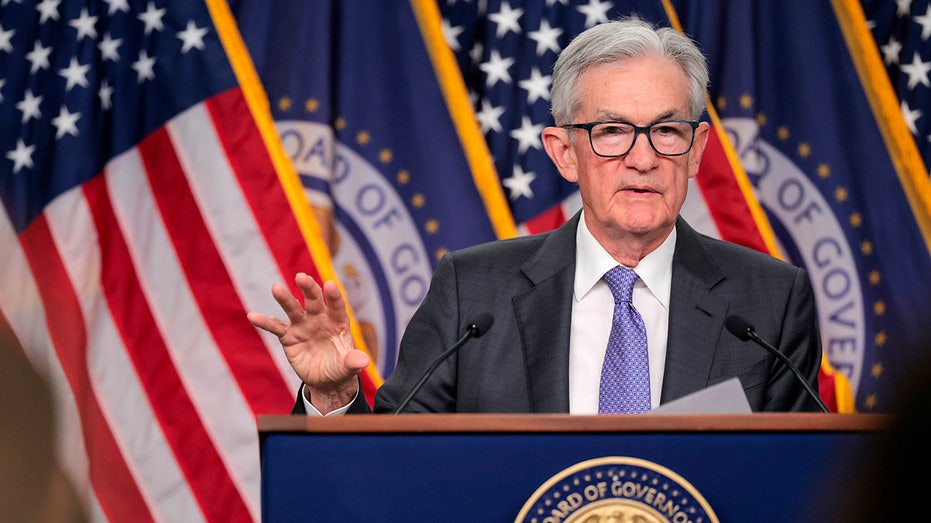
Federal Reserve Chair Jerome Powell and central bank policymakers hold their next interest rate meeting March 17-18. (Chip Somodevilla/Getty Images)
What does the February 2026 jobs report mean for the Fed and rate cuts?
The latest jobs data did little to shift the market's expectation that the Federal Reserve will leave interest rates unchanged when policymakers meet on March 17-18.
The CME FedWatch tool shows a 95.5% probability that the Fed will leave the benchmark federal funds rate unchanged at its current range of 3.5% to 3.75%.
GET FOX BUSINESS ON THE GO BY CLICKING HERE
What does the February 2026 jobs report mean for the stock market?
Markets opened lower on Friday and declined further in response to the February jobs report data before paring some of those losses as the trading session progressed later into the morning.
After paring deeper losses, the Dow Jones Industrial Average was down 1.27%, while the S&P 500 was down 1.1% and the Nasdaq Composite down 0.92%.