


Americans' paychecks grow stronger as Main Street shows new economic strength
Inflation, still well above the Federal Reserve's 2% long-run target, remains a concern
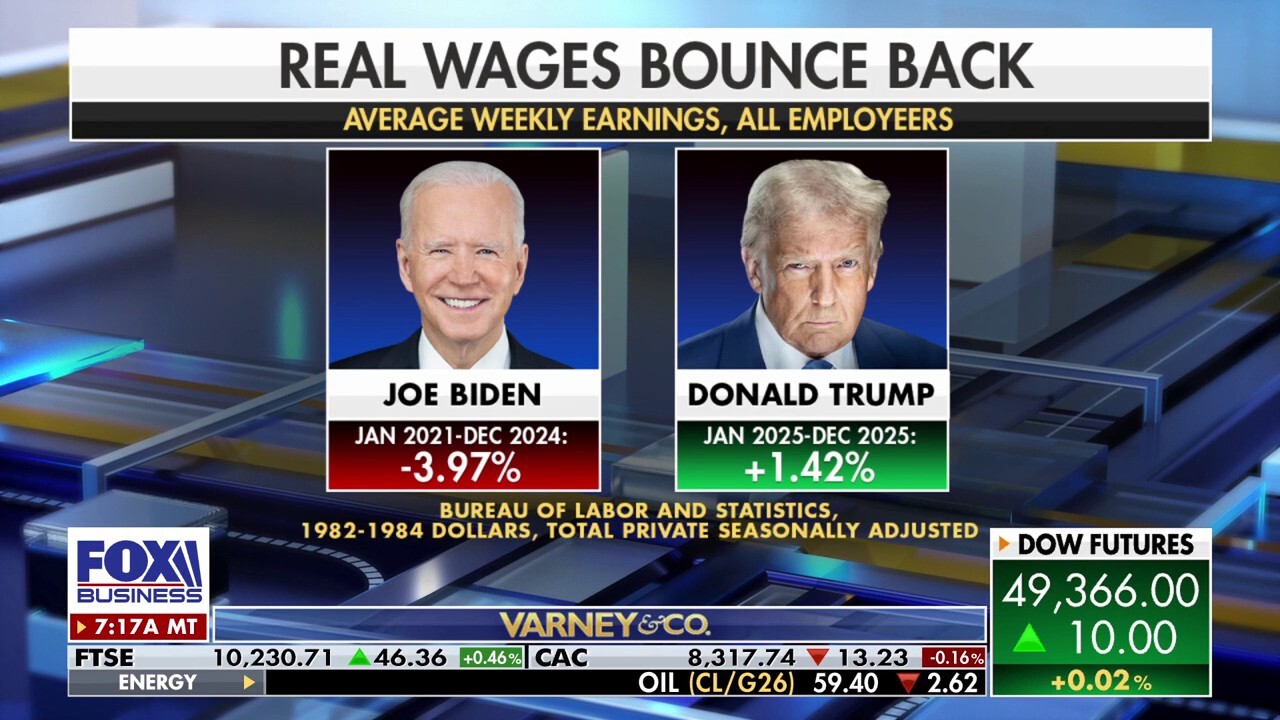
US economy is showing signs of strength as real wages bounce back
FOX Business Grady Trimble has the details on Varney & Co.
Recent economic data shows signs of growing strength on Main Street, as Americans' take-home pay ticks higher and contributes to rising retail sales and home purchases – though some headwinds remain.
Data from the Bureau of Labor Statistics released last week shows average weekly earnings increased 1.42% after accounting for inflation from January through December 2025.
Retail spending rose 3.3% on a year-over-year basis in November and was up 0.6% from the prior month after October's data was revised to a 0.1% monthly decline, according to Census Bureau data released this week.
Those figures were slightly stronger than the expectations of economists polled by Reuters, who predicted it would rise 0.4% in November after being unchanged as previously reported.
Lower interest rates have contributed to a surge in home sales, as the National Association of Realtors (NAR) reported Wednesday that existing home sales rose 5.1% in December amid recent declines in mortgage rates.
MORTGAGE RATES FALL TO LOWEST LEVEL SINCE 2022

Recent economic data has shown signs of strength on Main Street despite some headwinds. (Stefani Reynolds/AFP via Getty Images / Getty Images)
The average 30-year fixed-rate mortgage was 6.19% in December, according to Freddie Mac. That figure represents a decrease from 6.24% in November and 6.72% a year ago.
NAR chief economist Lawrence Yun said in a statement that while "2025 was another tough year for homebuyers, marked by record-high home prices and historically low home sales," housing market conditions began improving in the fourth quarter "with lower mortgage rates and slower home price growth."
"Inventory levels remain tight," Yun added. "With fewer sellers feeling eager to move, homeowners are taking their time deciding when to list or delist their homes. Similar to past years, more inventory is expected to come to market beginning in February."
INFLATION HELD STEADY IN DECEMBER, REMAINING WELL ABOVE THE FED'S 2% TARGET

Retail sales increased 0.6% on a monthly basis in November, according to data from the Census Bureau released this week. (Stefani Reynolds/AFP via Getty Images)
Inflation also appears to be holding steady, though the Bureau of Labor Statistics' consumer price index (CPI) showed that inflation remained elevated at the end of 2025.
The December CPI report showed that headline inflation increased 0.3% on a monthly basis in December and was up 2.7% from a year ago.
Core CPI, which excludes volatile measurements of food and energy prices, rose 0.2% in December and is up 2.6% over the prior year.
US ECONOMY ADDED 50K JOBS IN DECEMBER AS UNEMPLOYMENT RATE DECLINES

Home sales surged at the end of the year with more favorable mortgage rates. (Lindsey Nicholson/UCG/Universal Images Group via Getty Images)
Those figures remain well above the Federal Reserve's 2% long-run target for inflation and have put the central bank's policymakers in a difficult position in balancing their dual mandate of stable prices and maximum employment amid persistent inflation and a sluggish labor market.
The Fed cut its benchmark federal funds rate by 25 basis points at each of its past three meetings, which has indirectly contributed to lower mortgage rates that are more heavily influenced by bond markets.
GET FOX BUSINESS ON THE GO BY CLICKING HERE
The market expects the Fed will refrain from cutting rates when policymakers hold their next meeting at the end of January, with the CME FedWatch tool showing a 95% probability that the fed funds rate will remain at its current target range of 3.5% to 3.75% after the meeting.
Reuters contributed to this report.