


Oscar De La Hoya joins the battle on Capitol Hill to reinvent boxing
Oscar De La Hoya testified before a Senate committee on the future of the sport
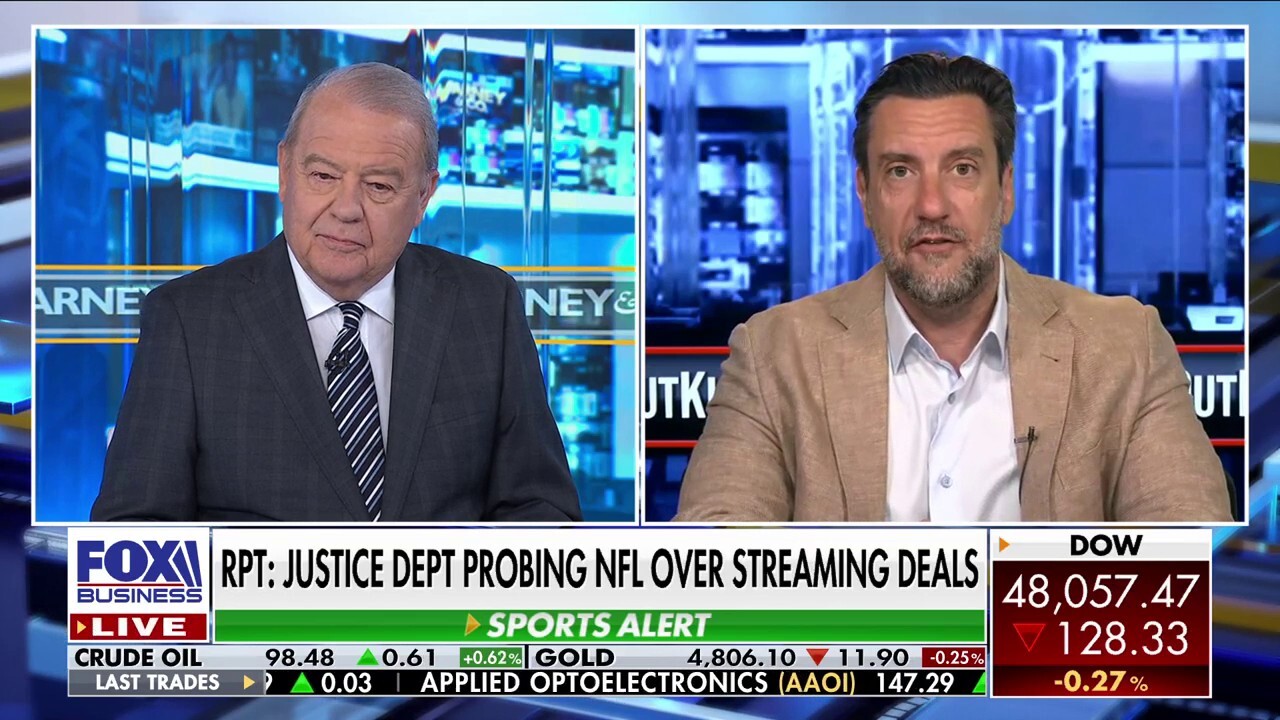
NFL, other sports leagues have 'gotten greedy' over streaming deals: Clay Travis
OutKick founder Clay Travis joins 'Varney & Co.' to comment on sports streaming and a report about the Justice Department probing the NFL over streaming deals.
Boxing’s future as both a sport and a business was front and center on Capitol Hill this week, where lawmakers and industry leaders discussed whether a fragmented system that has governed the sport for decades can still compete in today’s media landscape.
At issue is a proposed overhaul that would allow for the creation of a "new, centralized, alternative professional boxing system called Unified Boxing Organizations (UBO)."
The entities would be capable of controlling promotion, rankings and championships under one system.
Senate Commerce Committee Chairman Ted Cruz, R-Texas, framed the moment as a turning point for the sport’s business model.
DANA WHITE'S BOXING ORGANIZATION MAKES SPLASH CONOR BENN SIGNING IN LAS VEGAS AMID WRESTLEMANIA WEEK
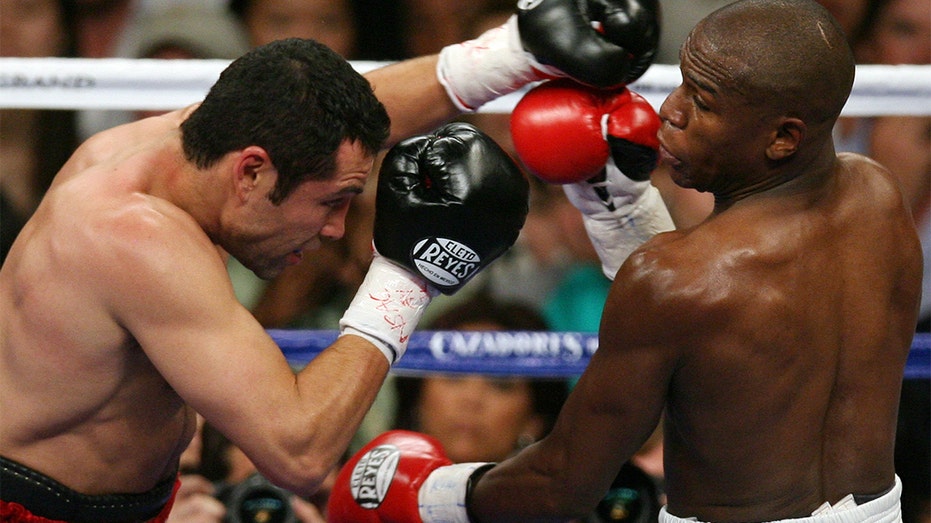
Oscar De La Hoya, left, fights Floyd Mayweather for the WBC super welterweight world championship in Las Vegas May 5, 2007. (Gabriel Bouys/AFP via Getty Images)
"Thirty, forty years ago, boxing was a dominant sport in America," Cruz said in an interview with FOX Business. "Now there’s chaos and division: fractured belts, disputed titles."
He added that the goal of the proposed reforms is "to make boxing great again" by increasing compensation, improving safety and rebuilding the sport’s pipeline of talent.
The legislation under consideration, the Muhammad Ali American Boxing Revival Act of 2026, and already passed by the House of Representatives, would not eliminate the current system outright.
TED CRUZ SLAMS TRUMP'S PROPOSED SPIRIT AIRLINES GOVERNMENT BAILOUT PLAN
Instead, it would create what Cruz described as "a second alternative path," allowing fighters to choose between the existing system and the more centralized model designed to generate larger media deals and new revenue streams.
That dual-track approach has done little to resolve a deeper divide within the sport, however.
Former champion and Olympic gold medalist Oscar De La Hoya, who testified before the committee, argued the current framework remains essential to protecting fighters, particularly those early in their careers.
"We’re here to make sure we protect the fighters’ rights," De La Hoya said in an interview with FOX Business after the hearing.
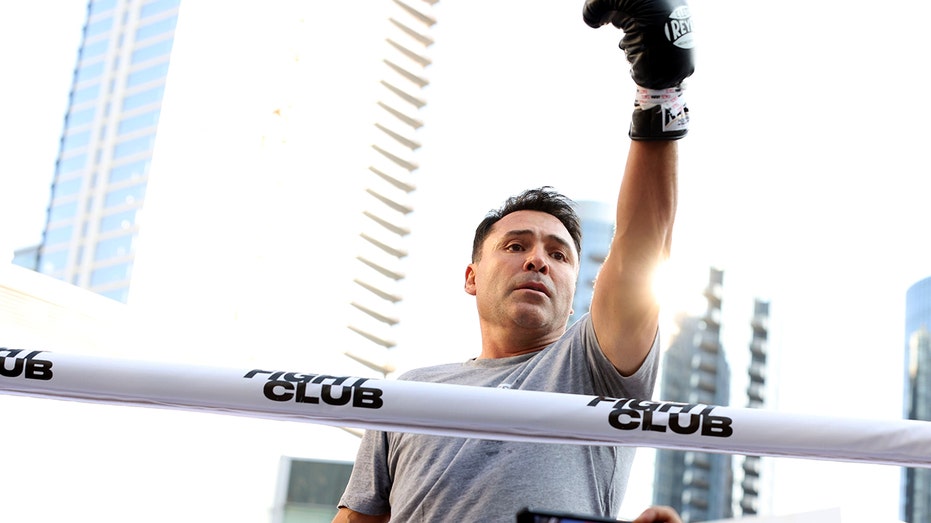
Oscar De La Hoya testified before a Senate committee this week. (Amy Sussman/Getty Images)
Drawing on his own experience, he pointed to a famous 1998 fight against Félix Trinidad, when he signed a lucrative deal with promoter Bob Arum but was unaware of the full financial windfall from the event.
At the time, De La Hoya said, fighters were not given clear disclosures about how much revenue their bouts generated, leaving them at a disadvantage in negotiations.
De La Hoya also argued that boxing’s decentralized system helps protect fighters by preventing too much power from being controlled by a single group.
"The fighters are making the majority of the money," he added. "We don’t have to answer to corporate America. We don’t have to answer to shareholders. … We answer to the fighters."
BOXER TYSON FURY'S DAD, JOHN FURY, REVEALS THEIR RELATIONSHIP 'IS DESTROYED'
But proponents of reform argue that fragmentation has become boxing’s biggest commercial obstacle.
WWE President Nick Khan, who also testified at the hearing, said boxing lacks the centralized infrastructure that has helped leagues like the NFL and UFC grow into global media titans.
"Boxing — especially in the United States — is dying. … It’s a sport that needs to be revived," Khan, who was representing TKO and Zuffa Boxing at the hearing, told FOX Business, pointing to limited media integration, weak merchandising and inconsistent event quality.
"When boxing is great, there might not be anything better," he said. "The issue is it’s just not great often enough."
Khan and other supporters envision a system that could standardize competition and deliver more consistent, marketable events that could potentially unlock larger broadcast deals and sponsorship opportunities.
NFL LAUNCHES LOBBYING BLITZ AT FCC TO DEFEND ITS MEDIA MODEL AS STREAMING SCRUTINY INTENSIFIES
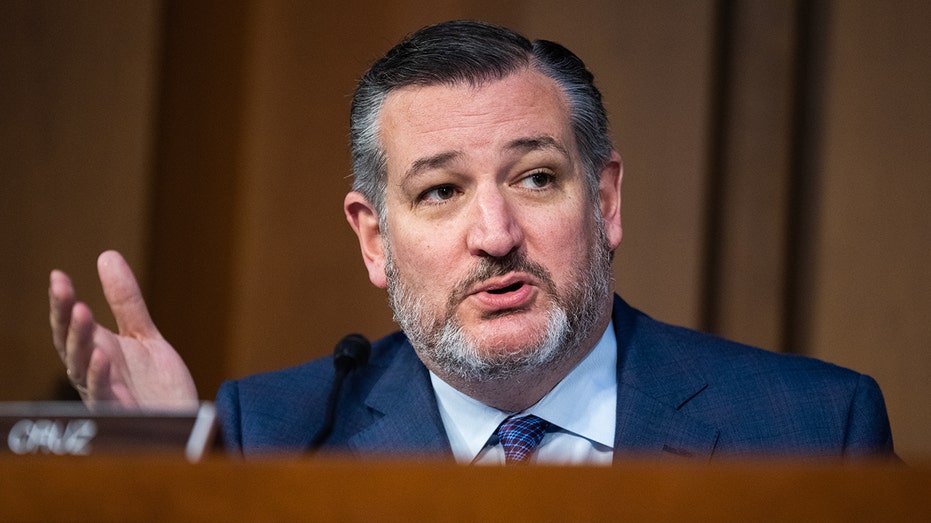
Sen. Ted Cruz, R-Texas, said the goal of the proposed reforms is "to make boxing great again" by increasing compensation, improving safety and rebuilding the sport’s pipeline of talent. (Tom Williams/CQ-Roll Call, Inc via Getty Images)
"There’s some central body" behind the growth of other major sports leagues, Khan said, suggesting boxing has struggled in part because it lacks that structure.
For now, Cruz emphasized flexibility, arguing that giving fighters a choice between systems could allow the market to decide what works.
"If they choose not to take the new option, that’s their choice," he said.
"But if it results in higher compensation … I think that improves the outcome for everyone."
CLICK HERE TO READ MORE ON FOX BUSINESS
Khan echoed that view, pointing to boxing’s decline in cultural and commercial relevance.
"In 1976, [boxing] was the most culturally dominant sport of (the) bicentennial year a mere 50 years ago. Now, if you look at the current state of boxing, not one major media conglomerate is in the boxing space outside [one] deal," Khan said.
"Our hope and plan is to change all of that. That will benefit the fighter."