



Federal Reserve makes interest rate decision ahead of midterms
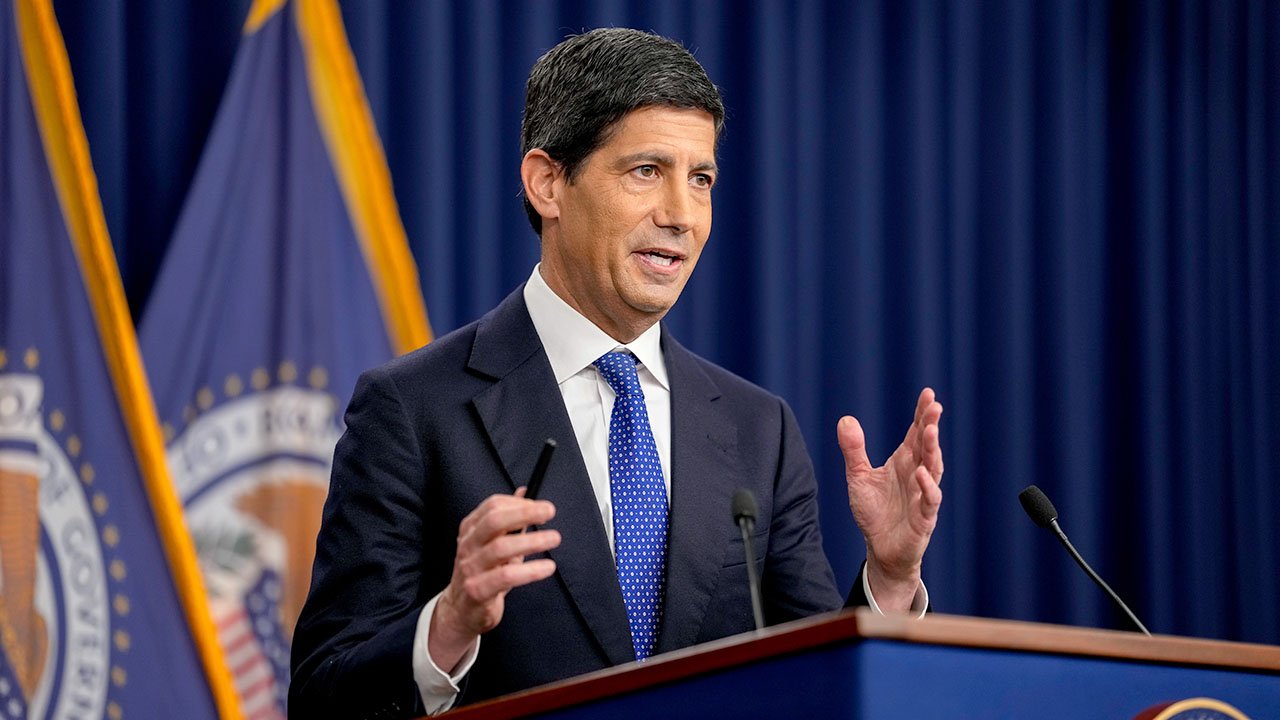
Central bank meeting is the fourth led by Fed Chair Kevin Warsh
FOMC holds last meeting before midterm elections
Navy Federal Credit Union chief economist Heather Long discusses the Federal Reserves upcoming interest rate decisions.
This story will be updated with further details from the Fed's October 2026 interest rate decision.
The Federal Reserve on Wednesday held its benchmark interest rate steady amid elevated inflation as policymakers opted to wait for additional economic data after hiking rates in September.
Fed policymakers voted 10-2 to leave the federal funds rate at its target range of 3.75% to 4%. The move follows a 25-basis-point rate hike in September, which was the central bank's first interest rate increase since July 2023.
The Federal Open Market Committee (FOMC), the central bank's panel responsible for monetary policy moves, noted that economic activity "is expanding at a strong pace" despite uncertainty that is in part due to geopolitical developments, with strong productivity growth and capital investment, while job growth has "kept pace with the workforce, and the unemployment rate has changed little."
The FOMC statement added that inflation remains elevated and that the "accumulation of more information will help the Committee determine the policy stance appropriate to ensure a timely return of inflation to the Committee's 2% goal. The Committee will deliver price stability."
WHY THE FED ISN'T READY TO DECLARE VICTORY ON INFLATION
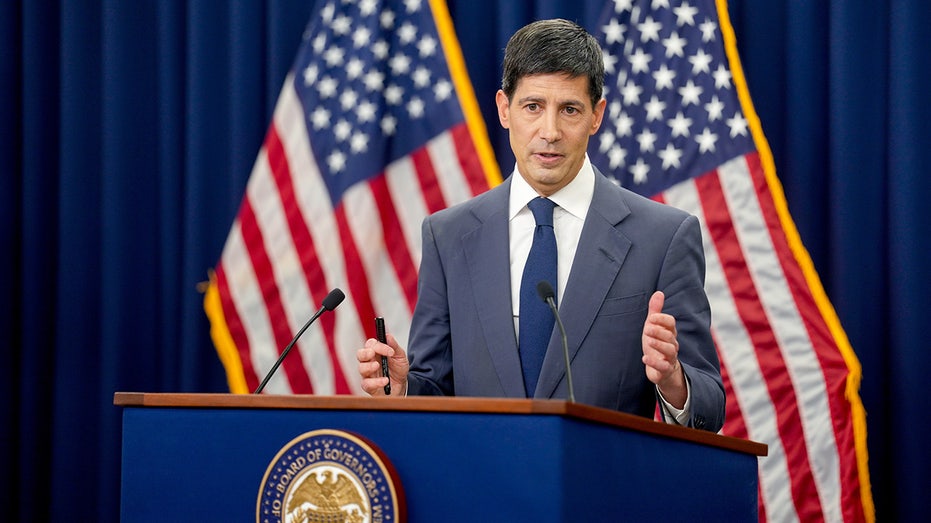
Federal Reserve Chair Kevin Warsh will hold a press conference to discuss the Fed's interest rate decision. (Al Drago/Bloomberg via Getty Images)
There were two dissenters from the FOMC decision to leave interest rates unchanged – Cleveland Fed President Beth Hammack and Fed Governor Lisa Cook each voted in favor of hiking interest rates by 25 basis points.
Federal Reserve Chair Kevin Warsh said that policymakers go through a process of "interrogating reality" as they assess economic conditions at each FOMC meeting, adding that the process has been complicated by high levels of investment, a steady labor market and elevated inflation.
Warsh noted that the labor market conditions are "quite positive" on that side of the Fed's dual mandate, which is to promote full employment, but added that on the price stability side of the mandate "Americans, of course, are still dealing with inflation that has been running above the committee's objective for close to six years. It's our responsibility to get inflation down."
He explained that since the Fed hiked rates by 25 basis points in September, policymakers have seen that financial and credit conditions have tightened for some businesses and households "much as we would expect."
Warsh added that market participants are "becoming somewhat more discerning in their capital allocations. And while overall financial conditions are tighter, I'm unwilling and unable to call them tight. But broadly, these developments go in the direction of achieving a longer, more durable period of economic growth and price stability."
FEDERAL RESERVE HIKES INTEREST RATES FOR FIRST TIME SINCE 2023 AMID STUBBORN INFLATION
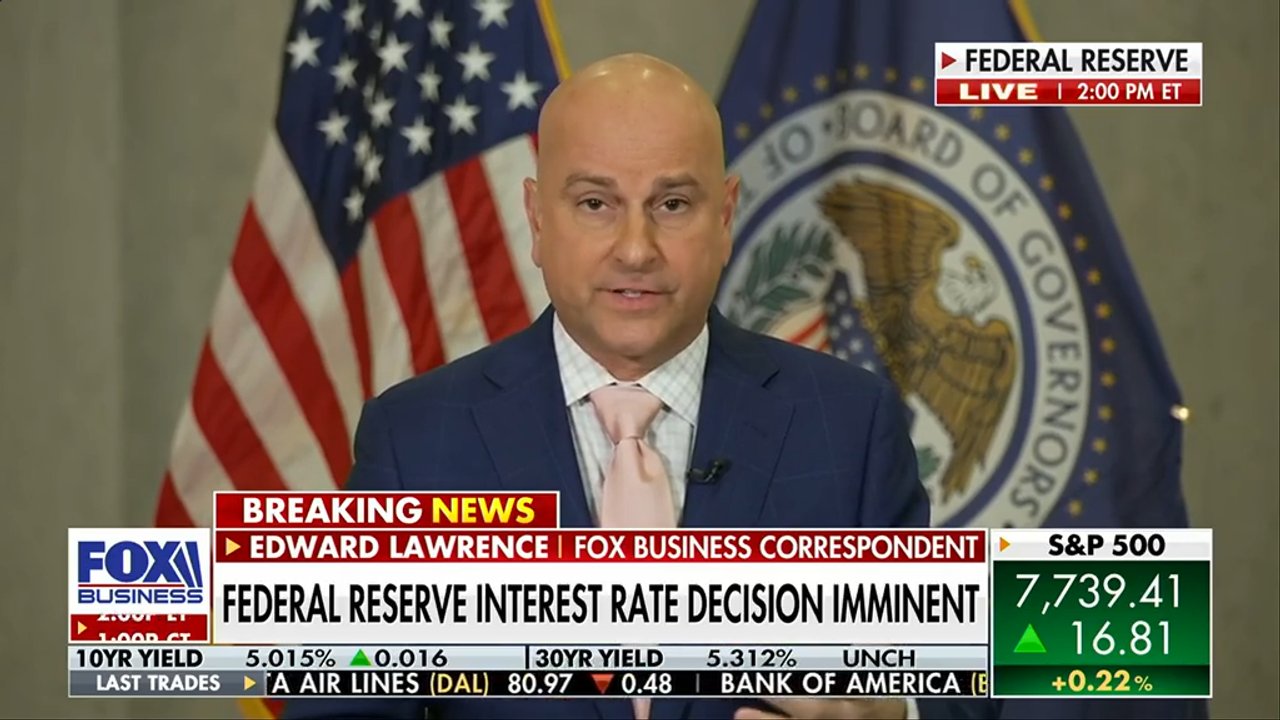
Federal Reserve leaves rates unchanged
FOX Business White House correspondent Edward Lawrence reports on the Federal Reserves decision as the central bank leaves rates unchanged.
The Fed chair also offered an update in the FOMC's review of its meeting schedule, saying that starting next year the FOMC will hold still hold eight meetings per year, but one of those meetings in 2027 "will focus exclusively on broad monetary policy strategy, with neither a vote on the federal funds rate nor a policy statement anticipated. The rest will be regular FOMC policy-setting meetings."
Warsh added that in 2028 he expects the FOMC will have two meetings dedicated to strategy discussions, with six related to policy decisions.
"Getting policy right involves assessing near-term developments at timely, regular and information-rich intervals, but it's equally important we reserve time and space as an intellectually diverse group for strategic deliberations, for thinking anew about big questions, looking out over longer time horizons," he explained.
"I believe the setting of the meeting schedule and agenda is more than some administrative detail. It's an institutional choice affecting the nature and the quality of our deliberations and ultimately, the wisdom of our decisions. It's yet another change to get the conduct of monetary policy on the right track," Warsh added.
During the question-and-answer portion of the briefing, Warsh was asked if the Fed has a soft inflation target given that policymakers held rates steady at this meeting.
"What I can do is tell you there's no soft inflation target and no implicit inflation target. There's a target of price stability and it's 2% as measured by PCE," Warsh explained. "When consumers interrogate reality, they look outside their window too. They go to the gas station too, and they see the prices are up."
"If you look out over the horizon, if you look at most but not all measures, what you see is households, businesses, financial markets – they have the confidence that they should have that this central bank will deliver price stability," he added.
The Fed chair was asked by FOX Business' Edward Lawrence about the correlation between oil prices and inflation, and how fast inflation could fall in response to falling oil prices.
Warsh responded that "to the extent that oil prices were to move lower, again, probably due to geopolitical events, that's something that we're going to have to interrogate" in terms of the Fed's dual mandate, and noted that futures prices for oil have "moved up over the course of the last several weeks, and I can't help but take note of that too."
The Fed chair was asked if the midterm elections next week factored into the Fed's decision to keep interest rates on hold and said that "politics played no role in the decision," adding that politics and the election weren't discussed during the meeting and that there is "an information-rich interval in the coming period, having nothing to do with politics."