






Effective AI governance doesn't slow innovation, AI expert tells House panel
Miriam Vogel warned that agentic AI deployments without oversight can quickly escalate from incidents into crises

Effective AI governance doesn't slow innovation, AI expert says
EqualAI CEO Miriam Vogel discusses AI governance and innovation.
A House panel held a hearing on Wednesday to discuss the need for the U.S. and China to responsibly pace artificial intelligence (AI) development ahead of this week's meeting between President Donald Trump and Chinese President Xi Jinping.
The House Select Committee on the Strategic Competition Between the U.S. and the Chinese Communist Party held a virtual shadow hearing led by Ranking Member Ro Khanna, D-Calif., with a focus on calls for controlling AI development to address risks like the loss of control or misalignment that could have economic and social consequences.
EqualAI CEO Miriam Vogel told the panel that there is a need for international engagement over AI governance, including between the U.S. and China, explaining that while "our institutions and values are different, if the U.S. wants to shape global AI norms, we first have to define and operationalize our own."
Vogel added that "American leadership on AI requires leadership on AI governance," and said that it can also help foster innovation, saying that "effective governance does not slow down innovation. It's the infrastructure that allows innovation to scale."
ANTHROPIC, OPENAI CEOS WARN AI COULD THREATEN HUMANITY WITHOUT SAFEGUARDS
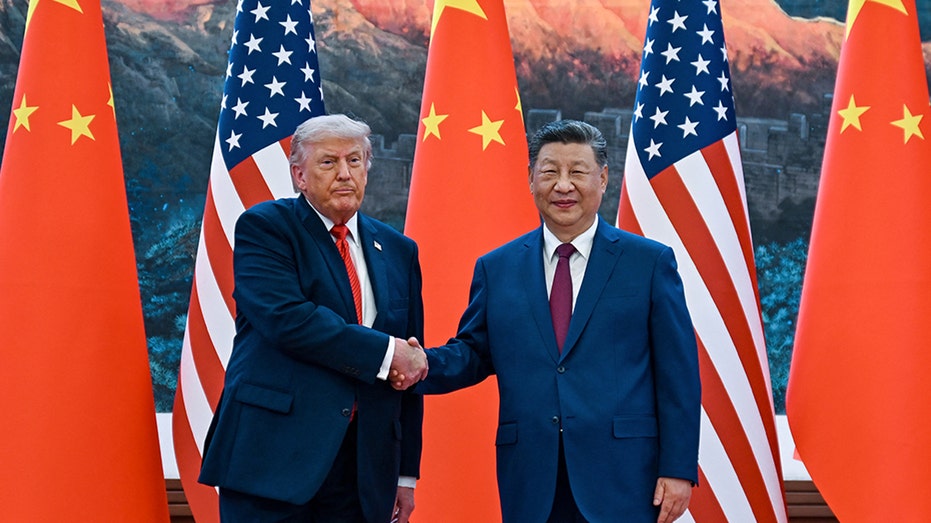
President Trump and Chinese President Xi are meeting this week, with AI rules expected to be a point of discussion. (Kenny Holston/AFP via Getty Images)
Vogel compared AI governance to regulations covering the automotive and aviation industries that are relied upon every day around the country.
"We fly 45,000 flights across the U.S. airspace daily because passengers trust international safeguards for certification, inspection, maintenance and investigation. We put our families in our vehicles daily because we know they've met global and national safety standards," she said.
"AI needs that same institutional discipline and we need an AI-literate workforce. This is a workforce issue, a competitiveness issue, and a national security issue," she added.
TRUMP REBRANDS AI, REJECTS 'GLOBALIST SCHEME' TO CONTROL TECH
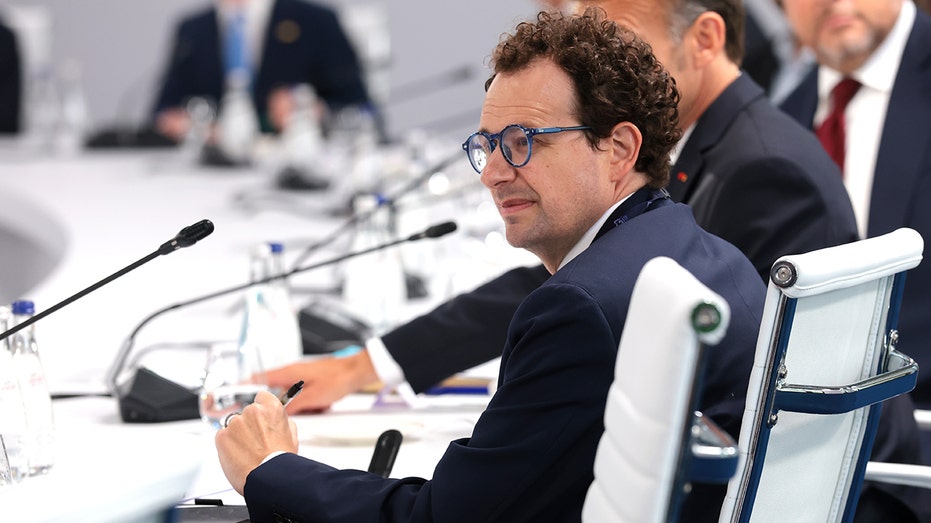
Anthropic CEO Dario Amodei is among the AI leaders who have called for slowing frontier model development to ensure alignment issues don't arise. (Anna Moneymaker/Getty Images)
Vogel discussed additional elements of what she sees as a plan for AI governance, saying that there is a need for "governance throughout the AI lifecycle."
"Too often, proposed safeguards end with the model development. Some of the highest-stakes AI interactions occur during deployment in financial institutions, hospitals, workplaces, and public institutions where governance can be weakest," she said.
Vogel noted findings by the World Economic Forum that less than 1% of companies have strong AI governance, while McKinsey reported that under a third of companies have AI governance in place.
Agentic AI, which can take actions and interact with other systems with a measure of autonomy granted by the user, may pose a concern without sufficient governance. Vogel explained that a simulation at EqualAI's agentic AI governance summit showed a lack of governance can lead to scenarios where "ordinary deployments quickly escalated into incidents and then crises."
TRUMP TO DECIDE WHETHER TO GREEN LIGHT US-CHINA ARTIFICIAL INTELLIGENCE 'HOTLINE' AGREEMENT: SOURCES
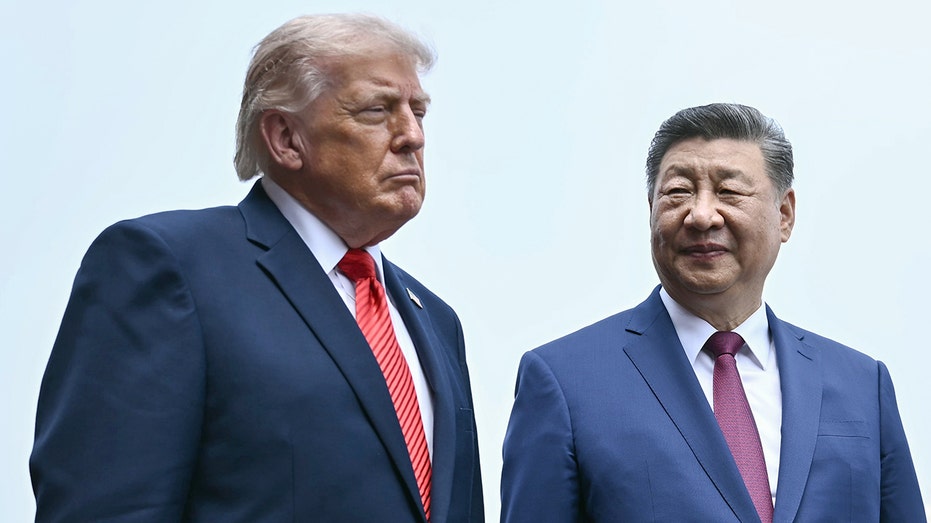
The White House is considering a "hotline" with China to allow direct communication over AI issues. (Brendan Smialowski - Pool/Getty Images)
The Trump administration is reportedly considering creating a "hotline" between the U.S. and China, similar to those used by the military, to give the two sides a direct line of communication if AI-related problems arise, like hacking, national security concerns, rogue AIs or other issues.
President Donald Trump has argued against regulations that could rein in AI development, telling the UN General Assembly this week that he doesn't want to stifle the growth of a technology that could be transformational for the economy.
AI leaders like Anthropic CEO Dario Amodei and OpenAI CEO Sam Altman have said they need to pace the development of cutting-edge frontier models to ensure the AI remains aligned and doesn't elude developers' ability to control it.
"Discussions about a pause in AI development must include China. American leadership requires governance that allows AI systems to earn and deserve, and safeguards should extend across the AI life cycle," Vogel said.
GET FOX BUSINESS ON THE GO BY CLICKING HERE
"We have navigated technological transformation before, not by stopping innovation, but by building the institutions capable of governing it," she added.