Dow sinks for second day as Trump’s tariffs rock global markets: Live Updates
The Dow, S&P 500 and Nasdaq are under pressure for a second day as global investors sell equities in response to President Trump’s sweeping tariffs against the majority of U.S. trading partners, including China who is retaliating. FOX Business is providing real-time updates on the markets, commodities and all the most active stocks on the move.
Coverage for this event has ended.
| Symbol | Price | Change | %Change |
|---|---|---|---|
| I:DJI | $38,314.86 | -2,231.07 | -5.50 |
| SP500 | $5,074.08 | -,322.44 | -5.97 |
| I:COMP | $15,587.79 | -,962.82 | -5.82 |
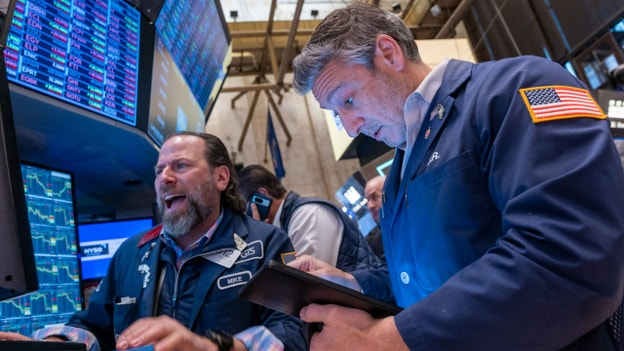
A trader works on the floor of the New York Stock Exchange in New York City. (Getty Images)
Stocks tumbled for a second-straight day after China imposed a 34% tariff on U.S. imports, raising concerns of a global trade war and possible recession.
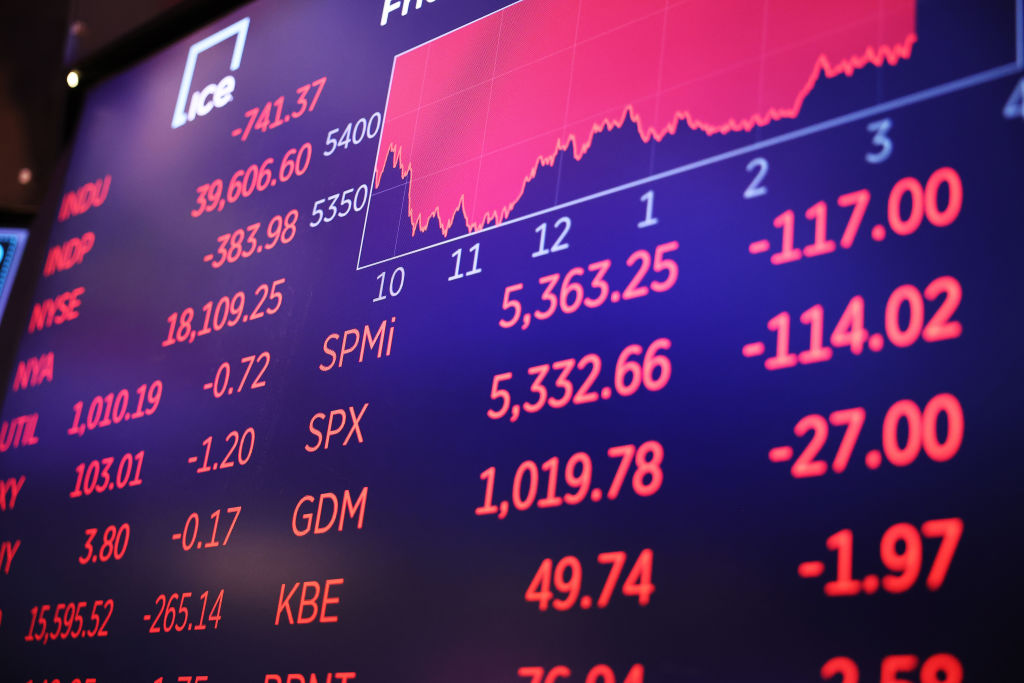
The Dow Jones Industrial Average plunged 2,231.07 points, or 5.5%, while the S&P 500 and Nasdaq Composite fell 5.97% and 5.82%, respectively. The Nasdaq entered into bear market territory on Friday.
The new China tariffs against the U.S. will go into effect on April 10, according to The Wall Street Journal. The 34% tariffs announced against China on Wednesday come in addition to the 20% tariffs already imposed against the country by the Trump administration.
U.S. stocks tumbled on Thursday after President Donald Trump announced his latest plan for tariffs, sparking fears of a global trade war.
The Dow Jones Industrial Average plunged more than 1,679.39 or 3.98%, while the S&P 500 and Nasdaq Composite fell 4.84% and 5.97%, respectively.
The hardest hit sectors in Thursday's session were consumer discretionary, energy and technology; consumer staples notched modest gains.
It was a roller coaster ride for U.S. stock investors as President Trump's reciprocal tariffs roiled global markets and after China clapped back by retaliating with their own tariffs.
The Nasdaq Composite entered a bear market, while the S&P 500 and the Dow Jones Industrials slipped deeper into correction territory.
Here's a recap.
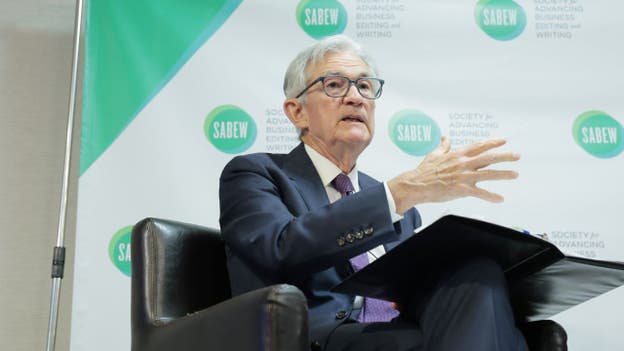
Federal Reserve Chairman Jerome Powell speaks during a Society for Advancing Business Editing and Writing annual conference on April 4, 2025.
Federal Reserve Chair Jerome Powell said at a conference Friday that President Donald Trump's tariffs are likely to increase inflation and slow economic growth, saying the central bank will do what it can to keep long-term inflation low.
President Donald Trump unveiled sweeping tariff plans on Wednesday that prompted a stock market sell-off and which have prompted retaliation from U.S. trading partners. The S&P 500 is down about 4% on Friday and more than 6% over the past five trading days, while the Dow Jones Industrial Average entered correction territory, down over 10% from its record high in December.
Powell said in his remarks at Friday's conference that it's difficult to predict the impact of tariffs on inflation and other economic indicators "until there is greater certainty about the details, such as what will be tariffed, at what level, and for what duration, and the extent of any retaliation from our trading partners."
"While uncertainty remains elevated, it is now becoming clear that tariff increases will be significantly larger than expected, and the same is likely to be true of the economic effects, which will include higher inflation and slower growth," he explained. "The size and duration of these effects remains uncertain."
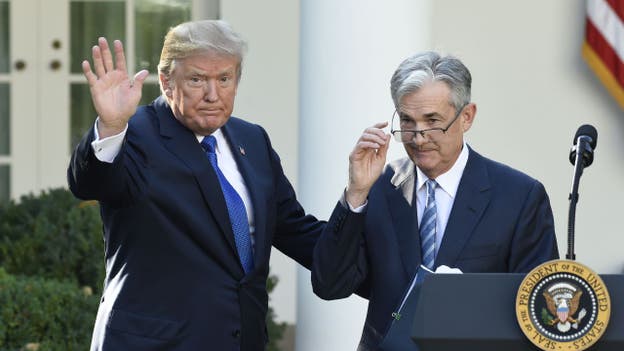
President Donald Trump (L) announces Jerome Powell (R) as nominee for Chairman of the Federal Reserve in the Rose Garden of the White House on Nov. 2, 2017.
President Donald Trump on Friday called on Federal Reserve Chairman Jerome Powell to cut interest rates.
"This would be a PERFECT time for Fed Chairman Jerome Powell to cut Interest Rates," Trump said in a Truth Social post. "He is always 'late,' but he could now change his image, and quickly. Energy prices are down, Interest Rates are down, Inflation is down, even Eggs are down 69%, and Jobs are UP, all within two months - A BIG WIN for America. CUT INTEREST RATES, JEROME, AND STOP PLAYING POLITICS!
Powell said at a press conference in March, when the Fed held rates steady for its second straight meeting, that the central bank isn't in a hurry to cut interest rates and will look to assess the impact of the Trump administration's tariffs on inflation.
Trump's post came ahead of Powell's speech on Friday at the Society for Advancing Business Editing and Writing conference.
The tech-heavy Nasdaq Composite sank into a bear market mid-morning Friday as investors continue to punish the tariff strategy. It is now down 20% from its record closing high of 20,173.89 hit last December.
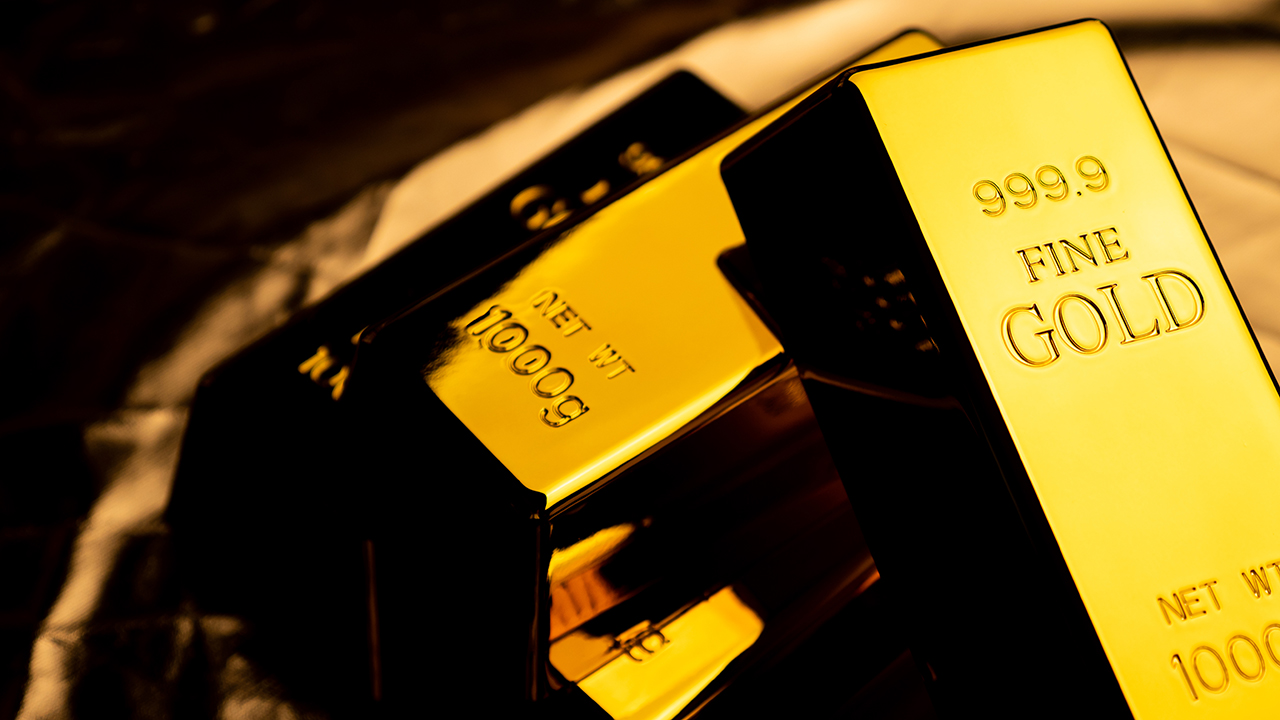
After hitting an all time high earlier this week, gold is seeing some pressure as volatility spikes around the world following President Trump's tariffs.
Still, experts say the precious metal hasn't lost its shine and likely won't this year.
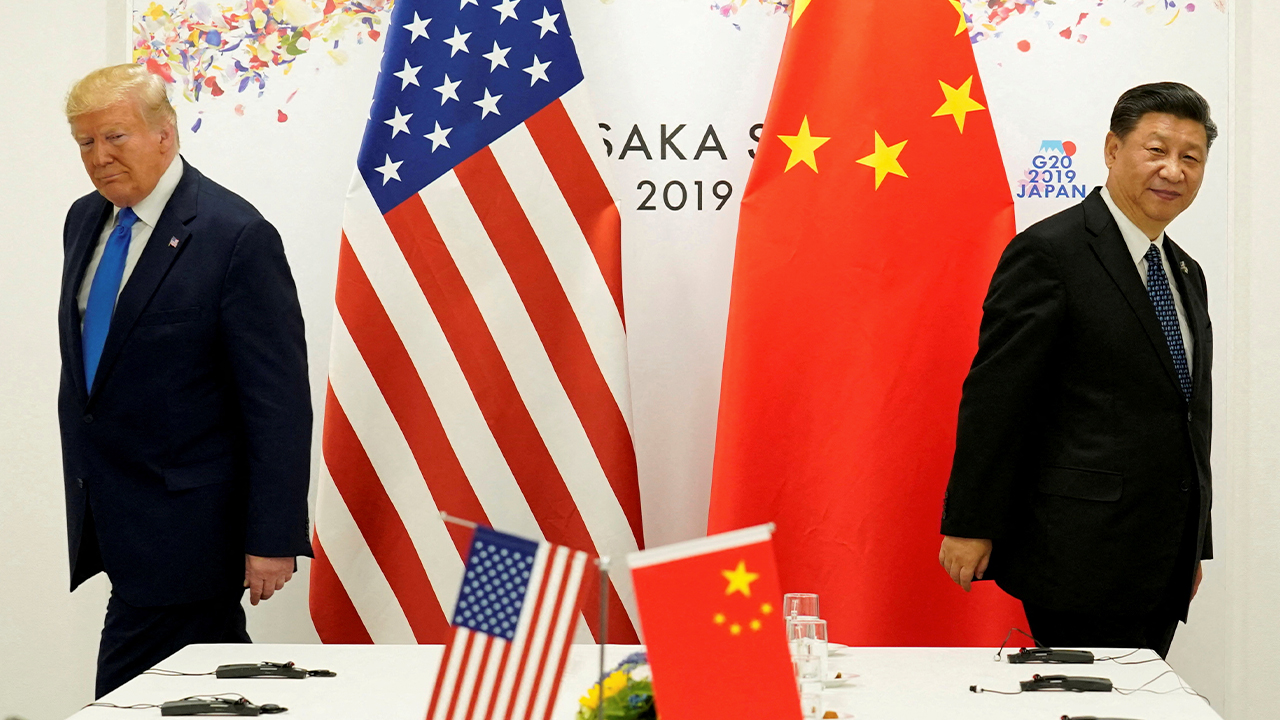
Beijing defiant in the face of a new 54% tariff imposed by President Trump, as the administration continues to tout its trade policy’s impact on U.S. jobs and manufacturing. China imposing its own 34% retaliatory tariff on all American goods early Friday, and is also reportedly restricting the export of several key rare earth minerals to the United States.
The Trump administration standing firm on its efforts, with U.S. Trade Representative Jamieson Greer telling FBN’s “Kudlow” the time for dialogue with trading partners is over, “we have to export,” and “we want these jobs here.”
The move sent stocks spiraling for a second day with Dow futures off over a 1,000 ahead of the opening bell.
U.S. stocks tumbled on Thursday after President Donald Trump announced his latest plan for tariffs, sparking fears of a global trade war.
The Dow Jones Industrial Average plunged more than 1,679.39 or 3.98%, while the S&P 500 and Nasdaq Composite fell 4.84% and 5.97%, respectively. The hardest hit sectors were consumer discretionary, energy and technology; consumer staples notched modest gains.
Trump rolled out the latest tariffs on Wednesday afternoon during an event at the White House Rose Garden, which he said is going to focus on imposing reciprocal tariffs on U.S. trading partners. Some of the levies were steeper than expected, especially against our Asian trading partners.The president indicated that aside from the reciprocal tariffs, the administration will establish a minimum baseline tariff of 10%.
Trump on Thursday said the roll-out of tariffs to an "operation," and said it was "going very well.""The markets are going to boom. The stock is going to boom, the country is going to boom, and the rest of the world wants to see Is there any way they can make a deal," Trump said Thursday as he departed the White House.
Live Coverage begins here