


Is now the right time to refinance a mortgage?
Only borrowers with rates above 6.65% would benefit from current market conditions, economist says

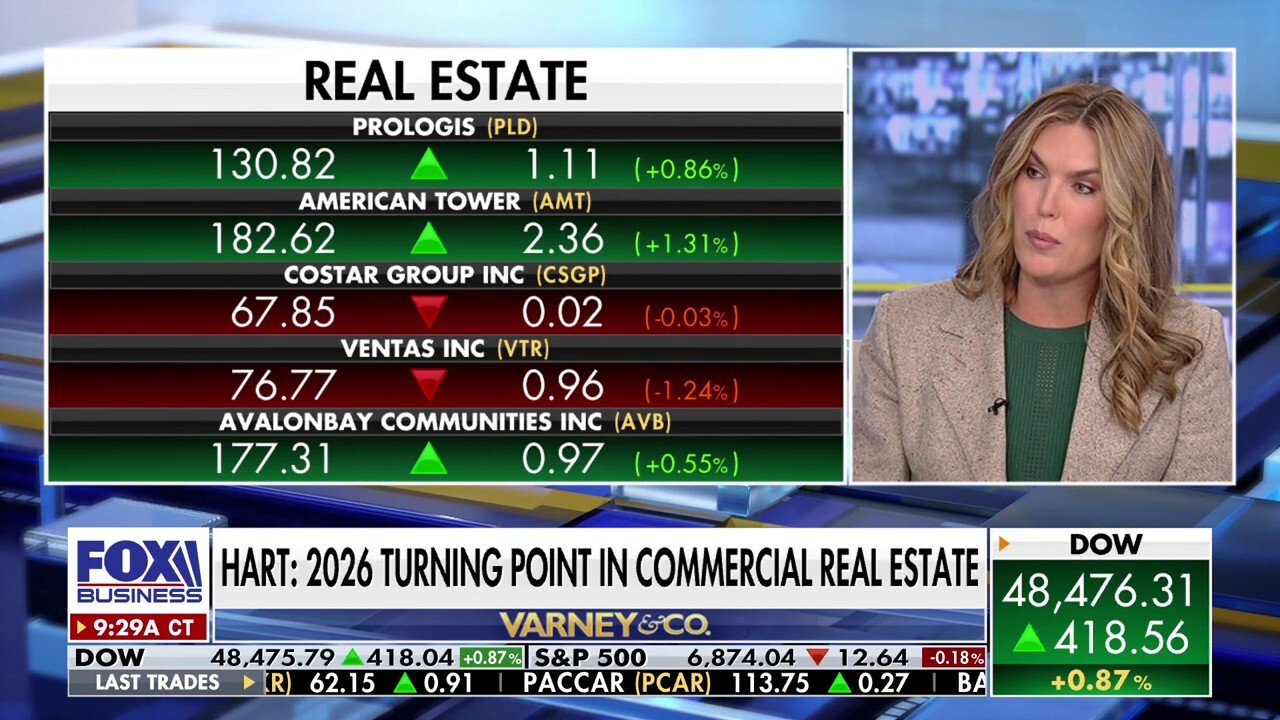
If 2025 was the pivot, 2026 is the year of 'stabilization' in commercial real estate, exec says
Newmark President of Leasing for North America Liz Hart gives her outlook for the commercial real estate sector on 'Varney & Co.'
Refinancing can seem tempting as interest rates ease. But it's a common misconception that lower rates automatically make refinancing cheaper, according to Realtor.com senior economist Jake Krimmel.
Krimmel cautioned that for many homeowners, it may not make financial sense, particularly for those looking to move soon.
Refinancing is considered a smart move if it passed a rule called the "breakeven point," which looks at whether upfront costs are outweighed by the savings from a lower rate. In this current market, many homeowners wouldn't pass this test.
"Loan size, remaining term and, most importantly, how long the borrower plans to stay in their home all matter," Krimmel said, adding that "a rule of thumb is closing costs divided by monthly savings."
While the Federal Reserve cut interest rates for the third straight time, that does not necessarily mean mortgage rates will fall. Rates are not directly affected by the Fed's interest rate decision but closely track the 10-year Treasury yield.
HOMEOWNERS INSURANCE COSTS COULD SPIKE OVER NEXT 2 YEARS
Even though policymakers signaled there could be only one rate cut in the new year as rates get closer to a neutral level, economists expect mortgage rates to drop slightly, hovering around 6.3% next year.
While this decline isn't massive, only down from its average of 6.6% in 2025, it leads to questions about refinancing, Krimmel said.

A "for sale" sign is seen outside a home on a canal in Cape Coral, Florida, on July 2, 2024. (Photo by OCTAVIO JONES/AFP via Getty Images / Getty Images)
HOUSING AFFORDABILITY CRISIS HAMMERING RURAL AMERICA
Refinancing isn't free – homeowners still need to pay closing costs on the new loan, which is why it's important that savings from lower monthly payments over time outweigh those costs, Krimmel said.
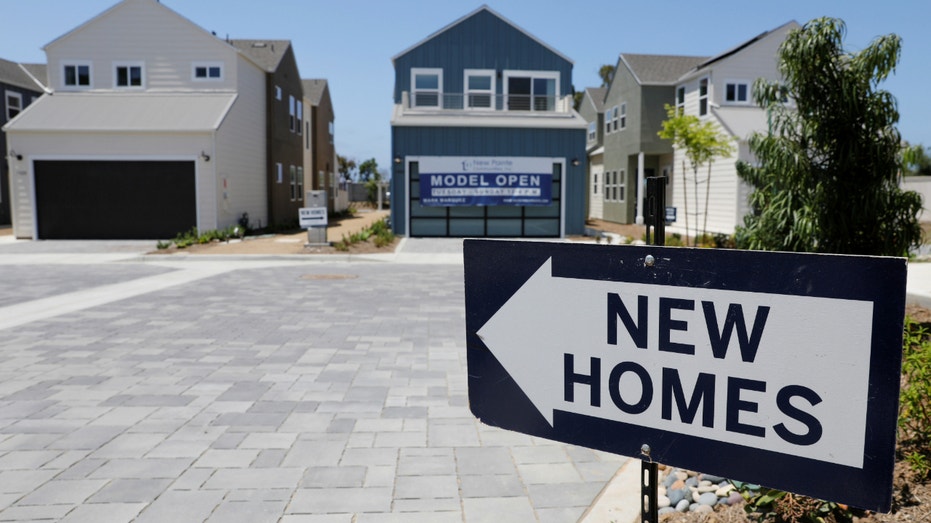
Newly constructed single-family homes are shown for sale in Encinitas, California, on July 31, 2019. (Reuters/Mike Blake)
Refinancing only makes sense when the new mortgage rate is about 0.5 to 1 percentage point lower than what a homeowner already has because it offers enough savings to justify the costs of refinancing, according to Krimmel.
MORE THAN HALF OF US HOMES LOST VALUE OVER THE LAST YEAR
Today, most homeowners have mortgage rates far below current market rates, so refinancing would lose them money. This is what has commonly become known as the "lock-in" effect. For example, today, only people with a mortgage rate of 6.65% or higher would hit that breakeven point where refinancing might pay off. Currently, more than 80% of homeowners have mortgage rates below 6%, which means only a small group of borrowers would benefit from refinancing anytime soon.
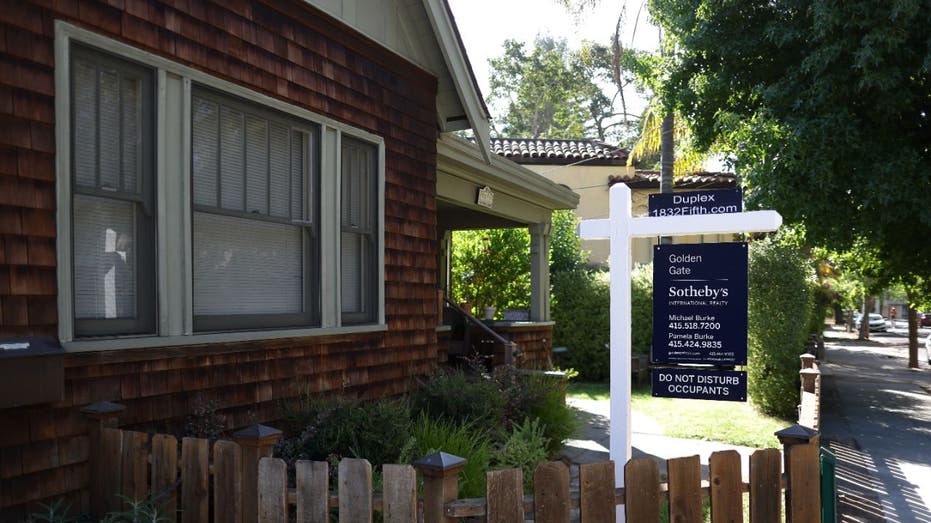
A sign is posted in front of a home for sale on August 7, 2024 in San Rafael, California. According to a report by Zillow, 30-year fixed mortgage rates have dropped 31 basis points to 6.06% while the 30-year fixed refinance rate has dropped 1.15% to (Justin Sullivan/Getty Images)
So if someone is planning on moving soon, Krimmel said refinancing "likely" won't be worth it.
The people who would benefit the most are those who bought homes recently – within the past two to three years – when rates were sitting between 7% and 8%. Even a small drop in market rates could put them more than 1% "in the money," making refinancing attractive. But these borrowers also tend to have large loan amounts and plan to stay in their homes for at least five more years, so refinancing savings would matter more.
GET FOX BUSINESS ON THE GO BY CLICKING HERE
Meanwhile, any small rate drops "are pretty irrelevant" for homeowners who are "out of the money" or locked-in to low 3% to 4% mortgages.
Homeowners also need to remember that it's not just about average mortgage rates reported but about what rate they can secure. Credit, down payments and shopping around are extremely important, and can matter more than swings in Fed policy, according to Krimmel.