


US plans to build nuclear reactor on the moon by 2030, NASA says
Fission surface power system would provide continuous energy for moon missions regardless of sunlight conditions
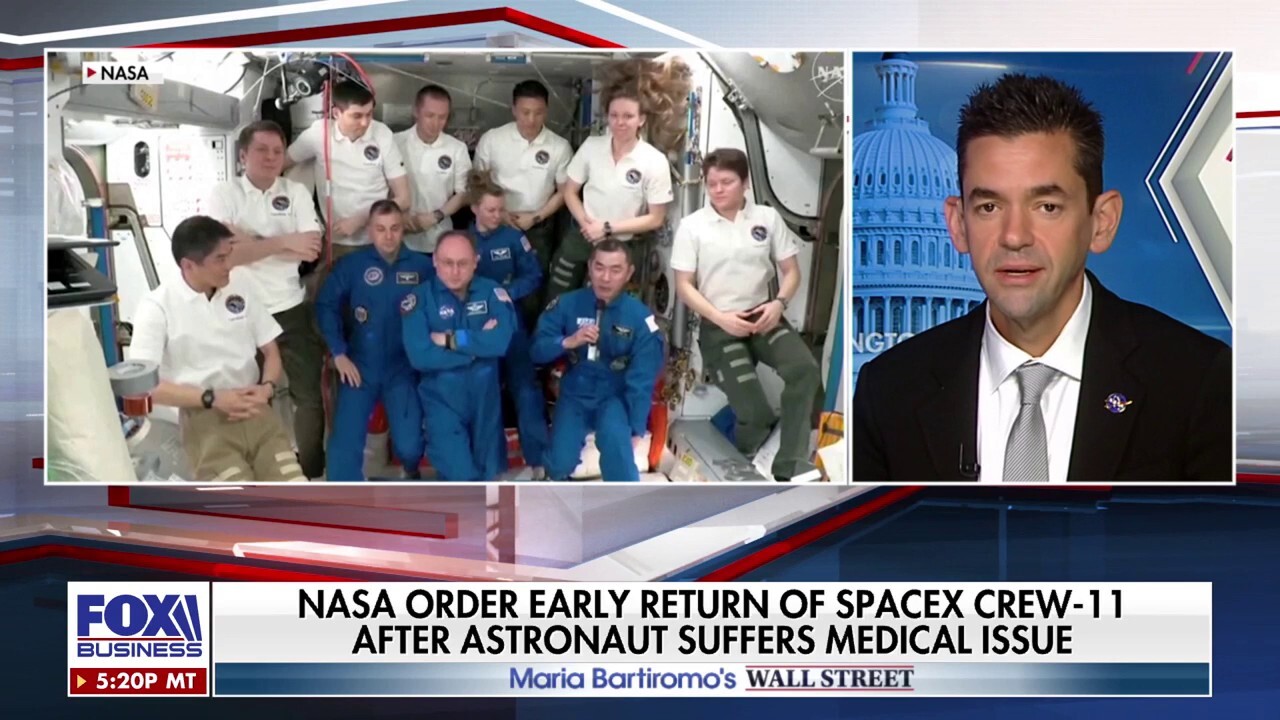
NASA chief details SpaceX Crew-11’s medical evacuation
NASA Administrator Jared Isaacman breaks down the emergency evacuation after an astronaut aboard SpaceX Crew-11 faced a medical issue on ‘Maria Bartiromos Wall Street.’
NASA and the Department of Energy (DOE) on Tuesday announced plans to develop a nuclear reactor for the surface of the moon by 2030.
The two agencies recently signed a new memorandum of understanding that solidified collaboration on the research and development of a fission surface power system to be used on the moon during NASA's Artemis campaign, as well as on future missions to Mars.
The project is being pursued under the Trump administration's space policy, which includes a vision of deploying nuclear reactors on the moon and in orbit to advance space exploration and commerce.
"Under President Trump's national space policy, America is committed to returning to the moon, building the infrastructure to stay, and making the investments required for the next giant leap to Mars and beyond," said NASA Administrator Jared Isaacman.
INSIDE NASA'S FAST-TRACK PLANS FOR LUNAR NUCLEAR POWER AND SPACE STATIONS TO OUTPACE GLOBAL RIVALS
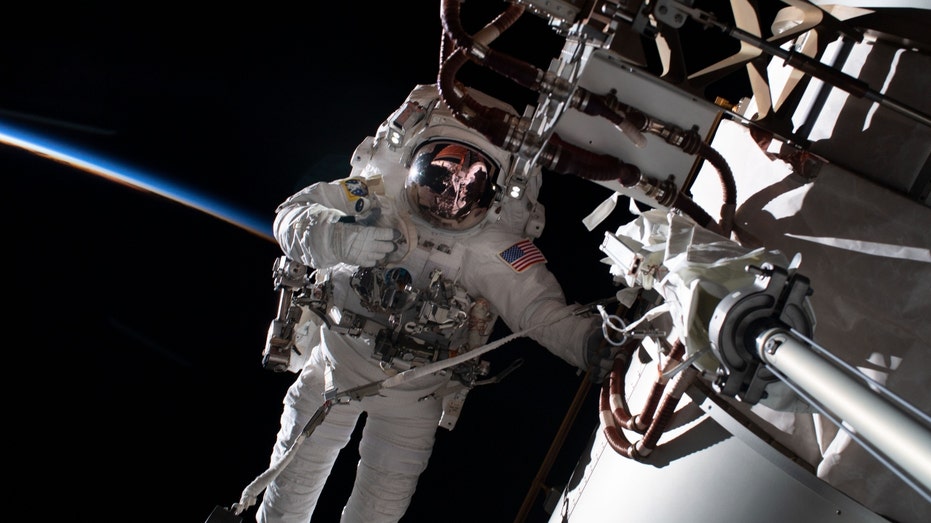
NASA and the DOE are developing a nuclear reactor for use on the moon's surface. (NASA)
"Achieving this future requires harnessing nuclear power," Isaacman added. "This agreement enables closer collaboration between NASA and the Department of Energy to deliver the capabilities necessary to usher in the Golden Age of space exploration and discovery."
NASA and the DOE plan to deploy a fission surface power system that can produce safe, efficient and plentiful electrical power that will be able to operate for years without the need to refuel.
NASA RETURNS HUMANS TO DEEP SPACE AFTER OVER 50 YEARS WITH FEBRUARY ARTEMIS II MOON MISSION
The project is being pursued under the Trump administration's space policy. (Soumyabrata Roy/NurPhoto via Getty Images)
The lunar surface reactor would help power future missions to the moon by providing a continuous and plentiful power source, regardless of sunlight and temperature.
Solar power can be unreliable on the moon because of the moon's month-long day cycle – which features two weeks of daylight followed by two weeks of darkness.
"History shows that when American science and innovation come together, from the Manhattan Project to the Apollo Mission, our nation leads the world to reach new frontiers once thought impossible," said Energy Secretary Chris Wright.

Jared Isaacman was sworn in as NASA administrator in December 2025. (Bill Ingalls/NASA via Getty Images)
He added that the DOE is "proud to work with NASA and the commercial space industry on what will be one of the greatest technical achievements in the history of nuclear energy and space exploration."
In August, Transportation Secretary Sean Duffy announced that NASA would fast-track development of a lunar nuclear reactor with a target launch date of 2030, and the space agency requested proposals for developing a 100-kilowatt nuclear reactor, which is enough to power about 80 homes.
GET FOX BUSINESS ON THE GO BY CLICKING HERE
"The goal is to power everything," a senior NASA official told Fox News Digital at the time. "Our systems, habitats, rovers, robotic equipment, even future mining operations – everything we want to do on the moon depends on this."
Fox News Digital's Morgan Phillips contributed to this report.