Apple's Tim Cook opens WWDC26 with keynote today with AI, software updates in focus
Apple’s WWDC26 keynote at 1 p.m. ET gives developers, investors and consumers a first look at the company’s next software updates across iPhone, Mac, iPad, Apple Watch, Apple TV and Vision Pro. The event is expected to focus heavily on artificial intelligence and the next generation of Apple operating systems. WWDC runs June 8-12 and opens with the keynote and a Platforms State of the Union.
Coverage for this event has ended.
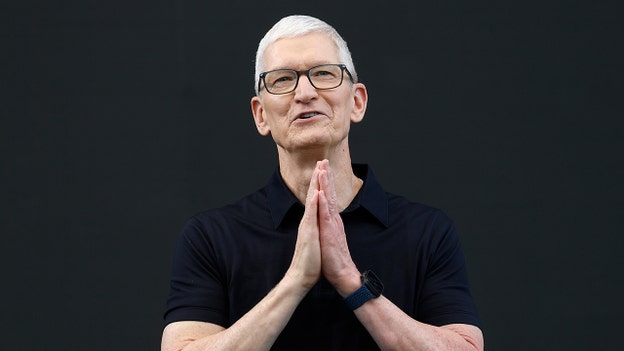
Apple CEO Tim Cook delivers the keynote address during the Apple WWDC at Apple Park on June 08, 2026 in Cupertino, California. Apple's annual WWDC runs through June 12. (Photo by Justin Sullivan/Getty Images)
Tim Cook opened WWDC26 on Monday in what is expected to be his final Worldwide Developers Conference keynote as Apple CEO, closing a chapter that has seen Apple become one of the world's most valuable companies.
Cook used the keynote to unveil a sweeping slate of updates across Apple's ecosystem, including a revamped Siri, new Apple Intelligence features, expanded child safety tools and the next generation of the company's operating systems.
The appearance carries added significance because Cook is expected to step down as CEO in September and transition to Executive Chairman, with Apple hardware chief John Ternus slated to succeed him.
Reflecting on his tenure near the close of the presentation, Cook told developers that some of his greatest moments as CEO came from sharing new technology with the Apple community and seeing what they built with it.
"It's been the honor of a lifetime to help advance that mission with teams whose creativity, care, and conviction continue to make a lasting difference in people's lives," Cook said.
Apple CEO Tim Cook on Monday highlighted the company's revamped Siri assistant following the conclusion of WWDC26, signaling that the new AI-powered experience is central to Apple's next generation of software features.
In a post on X, Cook shared a video showcasing Siri AI's new capabilities across Apple's ecosystem, including the iPhone, iPad, Mac and Apple Vision Pro.
"The next generation of Apple Intelligence powers an entirely new Siri: making the apps and experiences you rely on across iPhone, iPad, Mac, and Apple Vision Pro more personal and helpful than ever," Cook wrote.
The post came shortly after Apple unveiled what it called an "entirely new version of Siri" powered by Apple Intelligence during its annual developer conference.

Credit: Jens Büttner/picture alliance via Getty Images
Apple is using artificial intelligence to make password security less of a hassle, announcing that users will be able to automatically upgrade weak or compromised passwords with a single tap.
“Passwords already alerts you about weak and compromised passwords, but going to each site and changing them can take time,” Apple’s Beth Dakin said. “Now, you can automatically update eligible accounts to strong passwords with just a tap.
“Behind the scenes, Passwords uses Apple Intelligence and Safari to identically take action on your behalf, securely navigating through each website to sign in and fix your passwords, giving you peace of mind without the hassle,” she added.
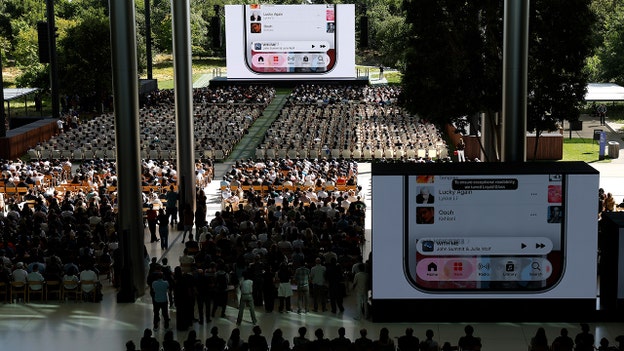
Attendees watch the keynote presentation during the Apple WWDC at Apple Park on June 08, 2026 in Cupertino, California. Apple's annual WWDC runs through June 12. (Photo by Justin Sullivan/Getty Images)
Apple is making its Shortcuts app easier to use by allowing people to create automations simply by describing what they want in natural language.
The company said Shortcuts can now use Apple Intelligence to interpret a user's request and automatically assemble the steps needed to create an automation. Instead of manually linking actions together, users can explain a task and have the app build it for them.
As an example, Apple showed how a user could type, "When I'm leaving work, message Pedro I'm on my way with my ETA," and Shortcuts would automatically create an automation that detects when the user leaves work, calculates the estimated arrival time and sends a message.
“It's the perfect superpower to stay on top of things every day,” Apple’s Cecelia Dantas said. “There's never been a better time to try out shortcuts.

A computer screen displays an image of artificial intelligence. (iStock)
Apple is giving Safari users a new way to customize their browsing experience, allowing them to create browser extensions using natural language prompts.
The company said a new feature called "Describe an Extension" lets users explain what they want an extension to do, and Safari will generate a custom extension that modifies webpages to fit those preferences.
Apple used the example of a user who wants to add a button to save and rate recipes while browsing cooking websites. Rather than writing code, users can simply describe the desired functionality and have Safari create the extension automatically.
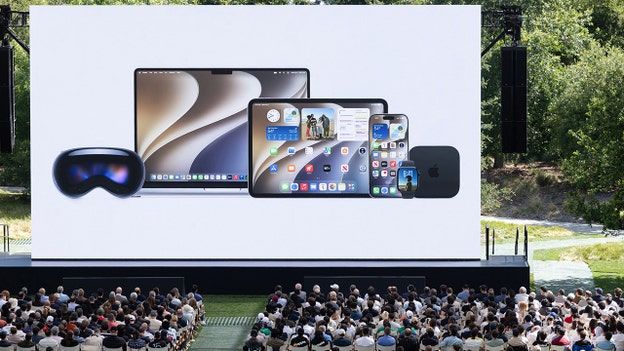
Attendees watch a presentation during Apple's annual Worldwide Developers Conference in Cupertino, California, U.S., June 8, 2026. REUTERS/Carlos Barria
Apple is bringing artificial intelligence directly into Safari, introducing a new feature that automatically organizes open tabs into related topics.
The company said Safari can use Apple Intelligence to analyze webpages, identify similarities and group related tabs together, making it easier for users to manage large browsing sessions. New tabs will automatically be added to relevant topics as users continue browsing.
Apple also unveiled a new "Notify Me" feature that can monitor webpages for specific changes. Users can describe what they're looking for in natural language, close the tab and receive a notification when Safari detects an update.
The new features are part of Apple's broader Apple Intelligence push unveiled at WWDC26, as the company looks to integrate AI tools into everyday apps and workflows.
Apple is making it easier for people outside its ecosystem to participate in shared photo collections, announcing that iCloud Shared Albums will now support contributions from Android and Windows users.
The update means friends and family using non-Apple devices can join Shared Albums and add their own photos and videos from trips, events and other shared experiences.
Apple also said Shared Albums will now support full-resolution sharing, allowing users to preserve image quality when contributing content to a shared collection.
The change was announced as part of Apple's WWDC26 software updates and expands one of the company's most popular photo-sharing features beyond the Apple ecosystem.
Apple is bringing more detail and realism to Maps, saying new AI-powered Flyover views can showcase everything from architectural features to individual trees.
The upgrade combines aerial imagery with vision intelligence models to create sharper, more immersive views of cities around the world. Apple says the enhanced Flyover experience will deliver greater detail across buildings, landscapes and other landmarks as part of its broader artificial intelligence push unveiled at WWDC26.
“Over in maps, we are giving Flyover an incredible boost using aerial imagery combined with vision intelligence models,” Apple’s Stacey Ford said during the keynote. “Everything is rendered in stunning, sharp detail, from beautiful architectural details to the shapes of individual trees, to the way light reflects off the glass of skyscrapers.
“You'll see cities around the world like never before,” she added. “We are thrilled about how these improvements touch so many parts of the experience across our platforms.”

Home security camera (iStock)
Apple announced Monday that its Home app will gain new Apple Intelligence features designed to make it easier for users to review security camera footage and manage notifications.
The company said Apple Intelligence can analyze recorded clips from compatible home cameras and automatically generate descriptions summarizing what happened in each video. The feature can also surface relevant footage from multiple cameras to help users better understand an event.
Apple said the Home app will be able to search camera recordings based on what was captured, allowing users to quickly locate specific moments such as package deliveries or activity in a backyard.
The company also announced smarter accessory notifications powered by Apple Intelligence. Rather than sending multiple alerts for related activity, the Home app can group notifications into a single ongoing activity that updates as events unfold.

Apple senior vice president of Software Engineering Craig Federighi speaks during the keynote address during the Apple WWDC at Apple Park on June 08, 2026 in Cupertino, California. Apple's annual WWDC runs through June 12. (Photo by Justin Sullivan/Getty Images)
Apple on Monday emphasized privacy as a core part of its artificial intelligence strategy, arguing that AI systems should be built around users rather than data collection.
During the company's WWDC26 keynote, software chief Craig Federighi said some companies appear to be "racing forward" with AI development without sufficient regard for the people using the technology.
"At Apple, we believe privacy in AI is non-negotiable," Federighi said while unveiling the company's next-generation Apple Intelligence architecture.
Apple said its AI features rely on a combination of on-device processing and its Private Cloud Compute infrastructure, which the company says ensures personal data is not stored or accessible to Apple. According to Federighi, user information is only used to fulfill a request and can be independently verified by outside experts.
The comments came as Apple introduced a revamped Siri, new Apple Intelligence capabilities and a new AI architecture developed in part through a collaboration with Google on next-generation foundation models.
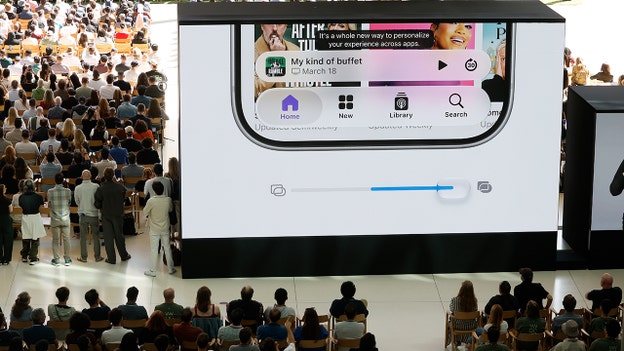
CUPERTINO, CALIFORNIA - JUNE 08: Attendees watch the keynote presentation during the Apple WWDC at Apple Park on June 08, 2026 in Cupertino, California. Apple's annual WWDC runs through June 12. (Photo by Justin Sullivan/Getty Images)
Apple said Monday it worked with Google to help develop the next generation of artificial intelligence models powering Apple Intelligence, marking one of the company's most significant AI partnerships to date.
During its WWDC26 keynote, Apple software chief Craig Federighi said the company "embarked on a deep collaboration with Google," leveraging technology behind Google's Gemini family of AI models.
Federighi said the companies worked together to create Apple's next-generation Foundation Models, which power Apple Intelligence features across the company's devices. Apple adapted the models to run both on-device and through its Private Cloud Compute infrastructure.
Apple said the new models deliver improved reasoning, image understanding and image generation capabilities, forming the backbone of major updates announced Monday, including Siri AI and new Apple Intelligence features across its software platforms.
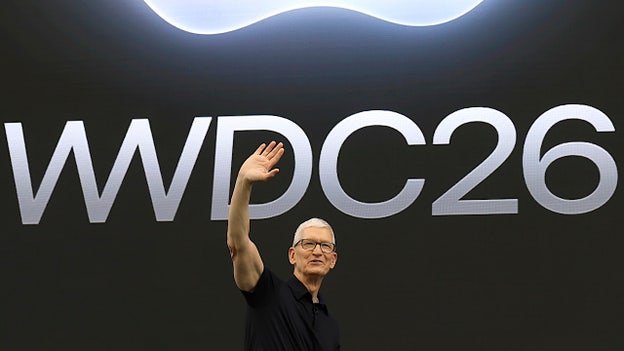
Apple's Tim Cook is presenting and opening the WWDC 2026 keynote, which marks his final Worldwide Developers Conference as CEO. He is set to transition to Executive Chairman in September, with incoming CEO John Ternus scheduled to take the reins. (Justin Sullivan/Getty Images)
Apple CEO Tim Cook opens WWDC26 today with a closely watched keynote expected to put artificial intelligence and the company’s next wave of software updates at center stage.
The keynote began at 1 p.m. ET, giving developers, investors and consumers their first look at what Apple has planned for the iPhone, Mac, iPad, Apple Watch, Apple TV and Vision Pro over the next year. It lasted over an hour.
Apple’s annual Worldwide Developers Conference runs June 8-12.
The event comes as Wall Street and the broader tech industry look for Apple to sharpen its artificial intelligence strategy after rivals have moved aggressively to roll out AI-powered assistants, search tools and productivity features.
Apple has said WWDC26 will include updates for its platforms, including AI advancements, new software capabilities and developer tools.
For Apple users, the keynote is expected to preview the next versions of the company’s operating systems, including updates for iOS, iPadOS, macOS, watchOS, tvOS and visionOS.
For developers, WWDC serves as the annual roadmap for building apps and services across Apple’s ecosystem, with more than 100 video sessions scheduled during the week.
The biggest focus may be Siri and Apple Intelligence. Analysts and industry watchers have been looking for signs that Apple can make its voice assistant more useful, more context-aware and more deeply integrated across devices.
Investor attention is also likely to center on whether Apple can show a clearer path for turning AI features into stronger iPhone demand and services growth.
Cook’s appearance also carries added significance. WWDC26 marks Cook’s final WWDC keynote as Apple CEO, with Cook expected to step down in early September and move into an expanded board role.
The Platforms State of the Union, aimed more directly at developers, is scheduled for 4 p.m. ET and will offer a deeper look at the tools and technologies behind Monday’s announcements.
An Apple logo is seen inside the Apple Store in Palo Alto, California
Apple unveiled several new Apple Intelligence-powered photo editing features Monday, including an AI tool called Spatial Reframing that allows users to adjust the composition and perspective of photos after they are taken.
The company said its upgraded Cleanup tool can now remove distractions with more realistic results, while a new Extend feature uses generative AI to expand images beyond their original borders, giving users more flexibility with framing and aspect ratios.
Spatial Reframing lets users virtually reposition the camera within a scene after a photo is captured. Apple said the feature uses on-device spatial models to preview changes in real time before generating new content to fill in portions of the image.
According to Apple, the tool only creates new content where needed, helping maintain the original look of the scene while improving composition. The feature was developed using technology derived from Apple's work on Vision Pro and spatial computing.
Apple said the new editing tools will work on most photos in users' libraries, including older images and photos taken with non-Apple cameras.
Apple unveiled a sweeping Siri overhaul, announcing a new AI-powered version of the assistant and a dedicated Siri app that lets users return to previous conversations across Apple devices.
The new Siri, powered by Apple Intelligence, will be more conversational and better able to handle multi-step requests, the company boasted.
Siri AI will not be “more intelligent, knowledgeable, and capable,” according to Senior VP Craig Federighi.
The assistant can draw on personal context, app actions, on-screen awareness, image understanding and broader world knowledge to answer questions and complete tasks across iPhone, iPad, Mac, Apple Watch and Vision Pro.
“Siri is now a profoundly more capable assistant that helps you find what you need and gets more done,” Apple's Siri chief Mike Rockwell said.
Users will still be able to access Siri the familiar way, including by saying “Hey Siri,” but the assistant will now support richer back-and-forth conversations.
Apple also showed Siri helping plan a World Cup watch party, pulling in web information, a message about a dessert, a group chat and a drafted invitation.
A dedicated Siri app will make it easier to revisit detailed responses or start new conversations.
Conversation history will sync privately through iCloud, allowing users to start a Siri chat on iPhone, continue it on iPad and finish it on Mac.
Key details in the reveal:
– Apple introduced an “entirely new version of Siri” powered by Apple Intelligence.
– The new Siri includes personal context, app actions, on-screen awareness, image understanding and access to world knowledge.
– A dedicated Siri app will show conversational history and allow users to revisit prior exchanges.
– Siri conversations will sync privately with iCloud across iPhone, iPad and Mac.
– Siri is being integrated into Spotlight on macOS.
– Users will be able to ask Siri about selected images, files or text through systemwide context menus.
– Siri will support richer conversations, in-depth plans, brainstorming and document feedback.
– Siri will get a new design, more expressive voices and more accurate systemwide dictation.
– Siri updates will extend to CarPlay, AirPods, Apple Watch, iPadOS, macOS and visionOS.
– A new Siri camera mode on iPhone will let users ask questions about what they see and take related actions.
– Visual intelligence will also come to Mac, iPad and Vision Pro.
– Siri will be able to help draft, edit, proofread and give feedback on writing across the system.
– Siri AI will launch in English first, with more languages to follow.
– On Vision Pro, Apple said users will be able to interact with a 3D visualization of Siri and start speaking simply by looking at it, without saying “Hey Siri.”
– On iPhone, the company said a new Siri mode in the Camera app will let users point their device at an object, get information and take actions, such as pulling nutritional insights from a plate of food or helping split a bill with Apple Cash.
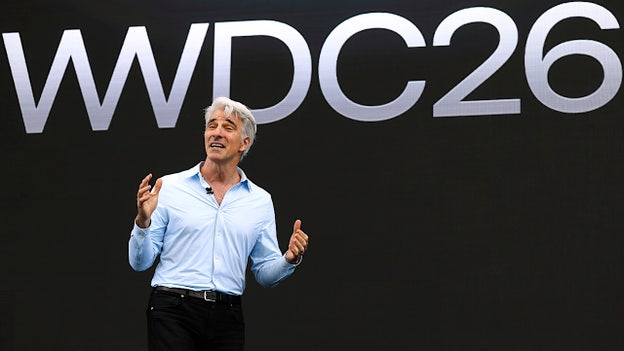
Apple senior vice president of Software Engineering Craig Federighi speaks during the keynote address during the Apple WWDC at Apple Park on June 8, 2026 in Cupertino, California. (Justin Sullivan/Getty Images)
Apple is making changes to its Liquid Glass design system after hearing from users and developers, including new readability improvements and more customization options across apps.
“Part of how we do this is by listening to users and developers," Apple’s Shubham Kedia said. "Our team really appreciates your feedback, and we considered it deeply as we refined the new design over the past year."
Apple is updating the foundation of Liquid Glass so it diffuses complex content behind it more effectively, while adding more depth and separation, according to Kedia.
Apple is also adding a new slider in Settings that lets users adjust the look from “ultra clear” to “fully tinted.”
Key details of the reveal:
– Apple said Liquid Glass is being tuned for better readability.
– A new Settings slider will let users make Liquid Glass more clear or more tinted.
– The customizations will apply automatically in apps whose developers already adopted Liquid Glass.
– macOS will get a more uniform toolbar across the top of apps to improve legibility.
– Mac sidebars will expand to the edges of windows and regain colorful icons.
– App icons are getting additional Liquid Glass layers to appear sharper and more defined.
The changes come a year after Apple introduced Liquid Glass as what it called its most ambitious cross-platform design update.

Senior VP Craig Federighi framed the releases as an effort to make Apple products “more responsive, even more reliable, and that much more delightful to use.” (David Paul Morris/Bloomberg via Getty Images)
Apple said Monday that iPhone and iPad apps will launch up to 30% faster under its next software updates, part of a broader WWDC push to make its devices feel quicker, smoother and more reliable.
The performance update was announced during Apple’s WWDC keynote, where Stacey Ford said the company spent the year working on system fundamentals, including memory usage, CPU utilization, networking operations and display rendering.
“Instead of just introducing a host of new features, we’re also taking the features you already rely on and making them even better, because we believe the best operating systems aren’t just built on big breakthroughs, they’re built on sweating the details,” Craig Federighi said.
Ford said Apple found a way to preload key data apps need when they open, helping first-party and third-party apps launch faster across iPhone and iPad.
Key details behind the reveal:
– iPhone and iPad apps will launch up to 30% faster.
– The improvement applies to third-party apps, not just Apple’s own apps.
– New photos will appear in users’ libraries up to 70% faster.
– AirDrop transfers will be up to 80% faster.
– Browsing and transferring files from iPad to an external drive will be up to five times faster.
Apple said iOS 27 will support iPhone 11 and the same iPhone models supported by iOS 26.
The update fits into Apple’s broader message at WWDC: Rather than focusing only on splashy new features, the company said it is tightening the everyday experience across iPhone, iPad and Mac.

Apple's vice president of health Dr Sumbul Desai (right) unveiled the newest child safety features. (James Manning/PA Images via Getty Images)
Apple announced a new push to expand child safety tools across its platforms Monday, saying the updates are designed to give parents more control while helping children use technology in healthier ways.
The announcement came during Apple’s WWDC keynote, where software chief Craig Federighi said the company is taking “a big step” to build what he called “a safe and trusted platform for kids.”
“We build products that empower people and enrich their lives while helping them stay safe,” Federighi said, pointing to Apple’s privacy protections, end-to-end encryption and safety features such as Crash Detection.
Apple's Dr. Sumbul Desai, VP of Health, said the approach is based on two principles: that every child is different and parents should decide what works for their families, and that child safety features should be shaped by health research and guidance from child development and online safety experts.
"First, we recognize that every child is unique, and parents are in the best position to decide what works for their family; second, we believe in shaping Apple's child safety features based on expert health research," Sumbul said.
"The best available research from clinical and child development experts, as well as online safety experts, emphasizes the importance of balancing learning, creativity, and connection with establishing boundaries around technology use."
The iPhone and other platform boundaries included protecting time for in-person social interaction, schoolwork, physical activity and sleep, she added.

Craig Federighi, senior vice president of software engineering at Apple Inc., during the Apple Worldwide Developers Conference (WWDC) at Apple Park campus in Cupertino, California, US, on Monday, June 8, 2026. (David Paul Morris/Bloomberg via Getty Images)
Apple announced Monday that the next version of macOS will be called Golden Gate, continuing the company’s tradition of naming its Mac operating system after California landmarks.
The reveal came after Apple’s WWDC keynote opened by outgoing CEO Tim Cook.
Software chief Craig Federighi then walked viewers through the company’s next set of platform updates across iPhone, iPad, Mac, Apple Watch, Apple TV and Vision Pro.
Federighi said Apple focused this year’s software work on three areas: making its platforms “more responsive and easier to use,” expanding trust and safety features, and delivering “a big leap forward for Apple Intelligence” with a new architecture that powers a revamped Siri across Apple devices.
The macOS name reveal came with Apple’s usual bit of WWDC theater.
Federighi joked that Apple’s marketing team had disappeared after leaving him a cryptic note pointing toward “the summer of love,” “a span of gold” and “infinite seas.” The mystery was quickly solved when the next macOS name was revealed as Golden Gate.
“Thank goodness. Perfect,” Federighi said. “Our next version of macOS is macOS Golden Gate.”
The name is a nod to San Francisco’s Golden Gate Bridge and the surrounding Golden Gate area, fitting Apple’s long-running pattern of California-themed macOS names. Previous versions have included Sonoma, Ventura, Monterey, Big Sur, Catalina, Mojave, High Sierra, Sierra, El Capitan, Yosemite and Mavericks.
Live Coverage begins here