


Younger Americans turn to riskier investments, spend more on nonessentials as homeownership dreams fade: study
US homebuyers have experienced a housing market affordability crisis in recent years

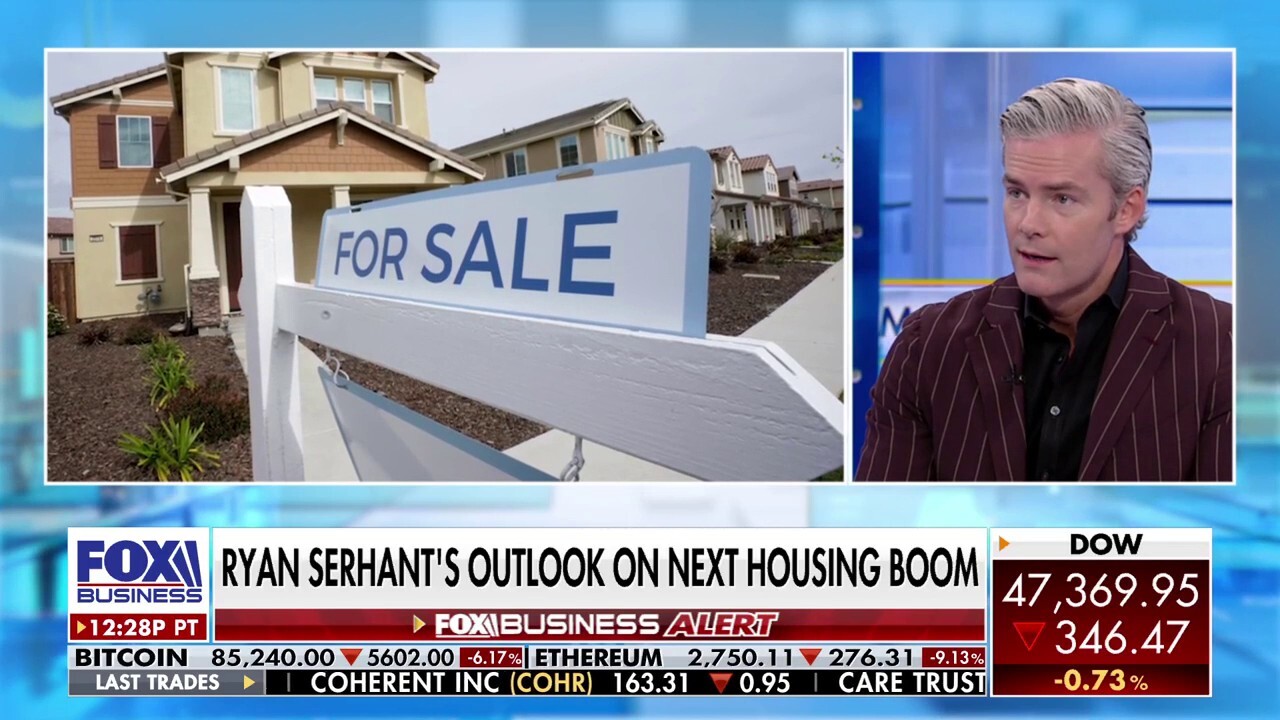
Now is 'as good a time as any' to buy real estate: Ryan Serhant
Serhant2 founder and CEO Ryan Serhant shares his perspective on the housing market on 'The Claman Countdown.'
Younger generations are making riskier investments and spending more recklessly as they give up on the American dream of owning a home, a new study suggests.
The research from Northwestern University's Seung Hyeong Lee and the University of Chicago's Younggeun Yoo published in their study, "Giving Up": The Impact of Decreasing Housing Affordability on Consumption, Work Effort, and Investment," showed the sharp decline in housing affordability in recent decades.
The duo developed a model that suggests that the cohort born in the 1990s will reach retirement with a homeownership rate roughly 9.6 percentage points lower than that of their parents' generation.
It also shows that as a household's perceived probability of attaining homeownership falls, it systematically shifts its behavior, such as spending a larger share of income or wealth on consumption, reducing work effort and taking on riskier investments.
HOUSING AFFORDABILITY TO IMPROVE FOR THE FIRST TIME SINCE 2020, REALTOR.COM SAYS

New research says younger generations are making riskier investments and spending more recklessly as they give up the dream of homeownership. (Getty Images)
"We find that, among households with net worth below the median U.S. house price, renters tend to spend more on credit cards, exert less effort at work, and participate more in cryptocurrency markets relative to homeowners with similar wealth," the researchers wrote.
Renters with relatively low wealth exhibit the same patterns, according to the report. Over time, the authors suggest, these patterns of behavior will compound, causing much bigger wealth gaps between those who keep trying to buy a home and those who give up on the idea.
Research shows that the cohort born in the 1990s will reach retirement with a homeownership rate roughly 9.6 percentage points lower than that of their parents' generation. (Nathan Howard/Bloomberg via Getty Images)
Lee and Yoo recommended offering a subsidy to help the largest number of young renters avoid giving up on trying to move ahead. This approach, according to the authors, will improve people’s well-being far more than giving everyone the same amount of money or targeting only the poorest 10%. It also helps more people buy homes, encourages work and reduces the need for government support.
THE PRICE OF BUILDING A HOME KEEPS CLIMBING AND UNCERTAINTY ISN’T HELPING
Contending with an affordability crisis
Buying a home has become dramatically harder for the average American over the past several years. The affordability crisis began in a clear, measurable way around 2020 and then accelerated sharply between 2021 and 2022 because home prices skyrocketed, mortgage rates surged and housing inventory remained tight.
Since interest rates spiked, there has been little movement in the market. Homeowners were unwilling to sell because they’d have to give up their ultra-low mortgage rates, and potential buyers faced limited inventory and higher borrowing costs.
THE TOP 3 REASONS HOUSING HAS BECOME SO UNAFFORDABLE IN THE US MARKET
Buying a home has become dramatically harder for the average American over the past several years. (Lindsey Nicholson/UCG/Universal Images Group via Getty Images)
GET FOX BUSINESS ON THE GO BY CLICKING HERE
Realtor.com Chief Economist Danielle Hale previously told FOX Business it's difficult to be certain what affordability will be like in 2026 and 2027. The silver lining, Hale said, is that mortgage rates have declined nearly 70 basis points from the 2025 high and about 150 basis points from the 2023 peak, which has already improved affordability in the near term.