


Federal jury convicts Huawei of stealing US trade secrets, violating Iran sanctions
Following a three-month trial in New York, jurors cleared the Chinese telecommunications conglomerate of racketeering while convicting it on charges that carry steep financial penalties.

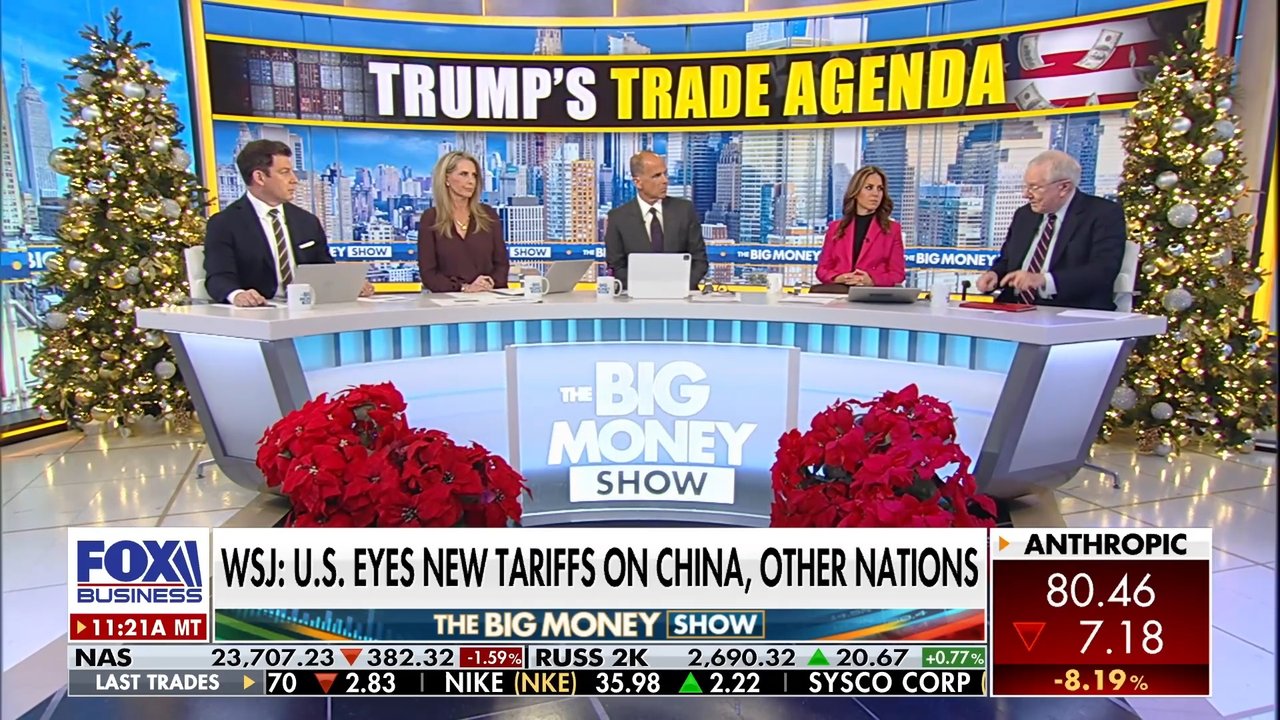
US eyes new tariffs on China and other nations, report says
'The Big Money Show' discuss the Trump administration trade agenda as a l report says the U.S. plans to raise tariffs on China and other nations. The panel also analyzes the threat of an AI bubble to the Chinese economy.
A federal jury in Brooklyn convicted Chinese telecom giant Huawei Technologies and three subsidiaries on Tuesday of conspiring to steal trade secrets from American companies, defrauding major global banks and violating U.S. sanctions on Iran, according to the Justice Department.
Following a three-month trial in the Eastern District of New York, jurors found Huawei and its affiliates — Huawei Device Co. Ltd., Futurewei Technologies Inc. and Huawei Device USA Inc. — guilty on 10 of 12 counts, including bank fraud, wire fraud, money laundering conspiracy, conspiracy to steal trade secrets and violations of the International Emergency Economic Powers Act (IEEPA). Jurors acquitted Huawei on two counts: racketeering conspiracy and conspiracy to obstruct justice.
"No person or company is above the law," Attorney General Todd Blanche said in a statement announcing the verdict. "For over two decades, Huawei built its global empire on a foundation of fraud, theft, and deception," Assistant Attorney General Tysen A. Duva of the Justice Department’s Criminal Division added. "Huawei’s crimes threatened the U.S. financial system, took advantage of American companies that compete honestly in the global telecommunications market, and undermined our national security."
CYBERSECURITY EXPERT SOUNDS ALARM OVER US INFRASTRUCTURE VULNERABILITIES AMID WIDESPREAD OUTAGES

An office building is seen at the headquarters of Chinese tech giant Huawei in Shenzhen, the host city for the upcoming Asia-Pacific Economic Cooperation (APEC) summit, in China's southern Guangdong province on November 15, 2026. (GREG BAKER/AFP via Getty Images / Getty Images)
To obtain billions of dollars and maintain access to U.S.-dollar clearing services, Huawei misled major global financial institutions about its secret Iranian operations, prosecutors alleged. The Justice Department said the conglomerate operated in Iran through a wholly owned subsidiary called Skycom, supplying telecom equipment and surveillance technology to the Iranian regime.
At trial, prosecutors also detailed how Huawei targeted proprietary technology across major U.S. telecom and tech firms, including T-Mobile, Cisco, CNEX, Quintel and Fujitsu, according to the Justice Department.
Sentencing is scheduled for Sept. 14, 2027, when the defendants face criminal fines, forfeiture and restitution, according to the Justice Department.
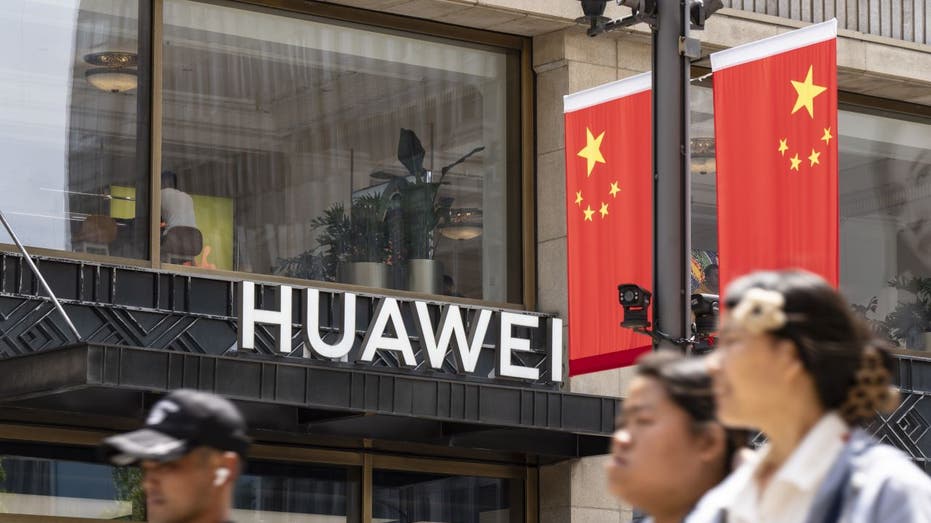
Signage at a Huawei Technologies Co. store in Shanghai, China, on Friday, May 3, 2024. (Qilai Shen/Bloomberg via Getty Images / Getty Images)
The criminal prosecution began in 2018 and surfaced publicly that December when Huawei Chief Financial Officer Meng Wanzhou, the daughter of the company's founder, was arrested in Canada on a U.S. warrant. Meng fought extradition for nearly three years before entering a deferred prosecution agreement in which she acknowledged Huawei illegally conducted business in Iran, a statement prosecutors presented to jurors at trial.

Huawei poses global national security threat: Robert O'Brien
Robert O'Brien on Trump's staff, Huawei and coronavirus
In a statement Wednesday, Huawei welcomed its acquittal on the racketeering charge, calling the remaining convictions "equally without legal or factual merit" and noting that the five trade-secret disputes cited by prosecutors were previously resolved civil matters. The company said it will "take all necessary legal actions to defend our rights and interests."
During closing arguments, Huawei defense attorney Brian Heberlig argued that the banks knew about Huawei’s business in Iran and were competing for its business, accusing prosecutors of having "cherry-picked" disparate incidents to allege a 20-year conspiracy. Heberlig said Huawei succeeded through "hard work, innovation, and investment in research and development."

A view shows a Huawei logo at Huawei Technologies France headquarters in Boulogne-Billancourt near Paris, France, February 9, 2024. (REUTERS/Gonzalo Fuentes / Reuters)
Beijing also pushed back against the verdict on Wednesday, with Chinese Foreign Ministry spokesperson Guo Jiakun telling reporters that China "firmly opposes the U.S. suppression and containment of Chinese companies and firmly supports Chinese companies in safeguarding their legitimate rights and interests."
CLICK HERE TO GET FOX BUSINESS ON THE GO
Despite being placed on a U.S. trade blacklist in 2019 that restricted its access to American technology, Huawei has diversified its business and emerged as a central player in China’s artificial intelligence push.
Reuters contributed to this report.