








Supreme Court rejects Verizon effort to get $46.9M FCC fine refund in location data case
Verizon sought another path to challenge the penalty after the justices ruled on the FCC’s forfeiture process in June


The Supreme Court has denied Verizon’s request for rehearing in its fight over a $46.9 million Federal Communications Commission penalty tied to the telecom giant’s former customer location data program.
The justices denied the petition Monday without explanation, leaving the court’s earlier judgment against Verizon in place, according to the court’s Aug. 17 order list.
The denial closes off Verizon’s effort to alter the disposition of a June Supreme Court ruling that upheld the FCC’s forfeiture process against a Seventh Amendment challenge.
The court found that an FCC penalty order does not automatically force a company to pay. If a company refuses, the government must go to federal court to collect, where the company can fully challenge the case before a judge or jury.
META HEADS TO TRIAL OVER ALLEGED SOCIAL MEDIA ADDICTION, RISKS TO CHILDREN
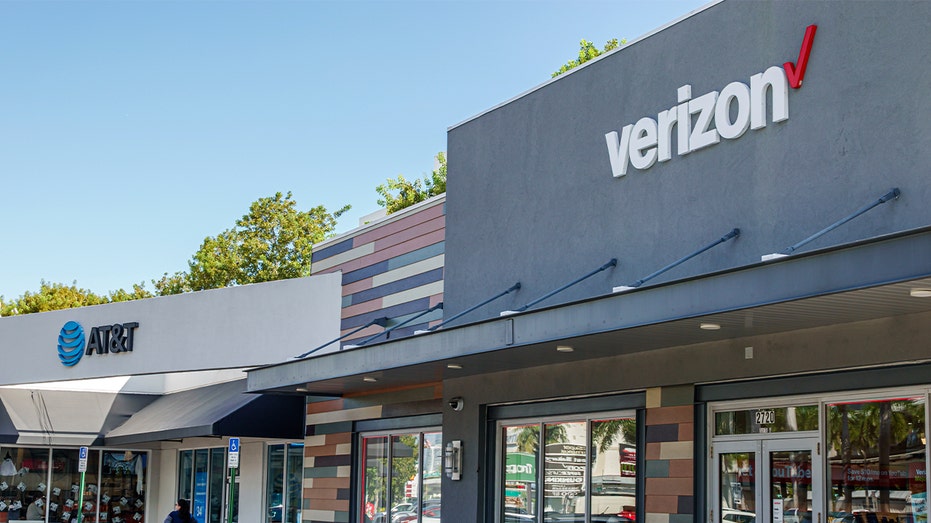
The exterior of Verizon and AT&T stores, Coconut Grove, Miami, Florida. (Jeffrey Greenberg/Universal Images Group via Getty Images / Getty Images)
In that June 4 ruling, the Supreme Court left the lower court’s decision against Verizon in place but sent AT&T’s separate case back to the Fifth Circuit for further review. That difference in how the two cases were resolved became central to Verizon’s rehearing request.
The FCC imposed the nearly $47 million forfeiture in 2024 after finding that Verizon failed to adequately protect customer location information made available through a program involving third-party location service providers.
WAYMO GETS REGULATORY APPROVAL TO SCALE UP ROBOTAXI SERVICE ACROSS CALIFORNIA, ENTER 2 NEW MARKETS
Verizon paid the penalty under protest and challenged the FCC’s order in federal court. The Second Circuit rejected the company’s challenge last year, including its argument that the device-location information at issue fell outside the customer-information protections of Section 222 of the Communications Act.
Verizon said Monday, Sept. 30 that it is "aware of an issue impacting service for some customers." (CFOTO/Future Publishing via Getty Images / Getty Images)
In its rehearing petition, Verizon argued that the FCC’s forfeiture order appeared to impose an immediate obligation to pay within 30 days, while the government later maintained before the Supreme Court that carriers could decline to pay and instead await enforcement action.
The Supreme Court’s June opinion did not decide whether the carriers had been misled into paying or whether a refund could be appropriate. The justices said they expressed no view on the merits of that argument, what relief might be available or in what proceeding.
In this photo illustration, the Verizon Wireless logo is seen displayed on a smartphone and in the background. (Photo Illustration by Igor Golovniov/SOPA Images/LightRocket via Getty Images / Getty Images)
Verizon then asked the Supreme Court to send the case back to the Second Circuit so the appeals court could consider whether the company had been misled into paying the penalty and whether it should receive a refund.
The Supreme Court’s denial Monday leaves the Second Circuit judgment affirmed and Verizon’s requested remand off the table.
FOX Business reached out to Verizon and the FCC for comment.
The broader dispute over the FCC’s authority remains active. T-Mobile and Sprint have separately asked the Supreme Court to review their own location data penalties, challenging, among other issues, whether the location information at issue falls within the Communications Act’s definition of protected customer proprietary network information.
Their petition was filed June 22 and remains pending.
CLICK HERE TO GET FOX BUSINESS ON THE GO
The continuing litigation could have implications for how the FCC applies federal customer data protections and structures large civil forfeitures against telecommunications companies.