




LARRY KUDLOW: Can Kevin Warsh have his cake and eat it too?
The new Fed chairman intends to be a reformer at the central bank
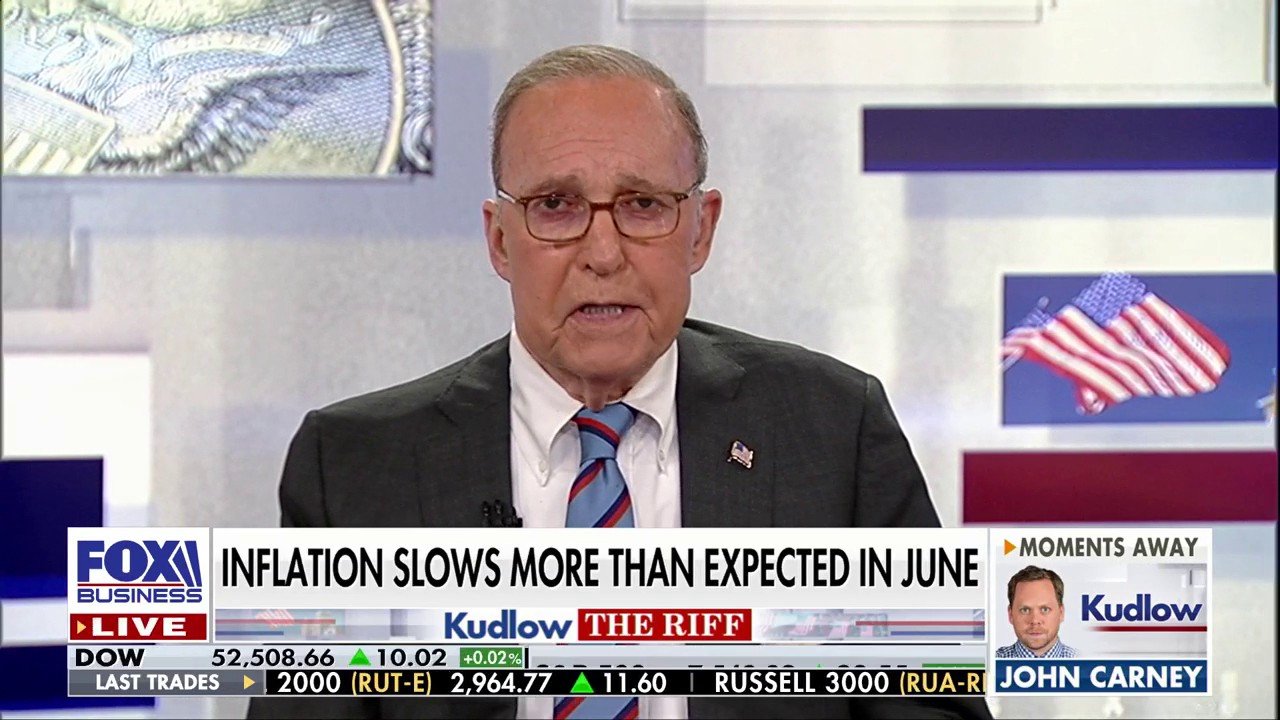
The sun was shining on the Fed chairman, Kevin Warsh, today as he gave his first Congressional monetary report on a day when the consumer price index unexpectedly fell for the first time in six years. And that takes a near-term Fed rate hike off the table.
As Mr. Warsh said, it’s too soon to declare "mission accomplished," but he vowed to defeat inflation and get monetary policy right during his appearance before the House Financial Services Committee. As he put it: "The 63 months of inflation above target has been an unfair burden. It has been a tax on the American people and businesses. We plan on getting rid of that tax if that means we need a regime change in policy and we need new consideration of practices, some of which have been working, some of which haven’t, that’s what we aim to do"
The new Fed chairman has been in office only two months, but energy, precious metals, and farm commodity prices have already started trending lower. Mr. Warsh intends to be a reformer at the central bank, and has commissioned a number of high-level task forces that will report later in the year on "regime change," as he puts it.
Yet one thing he understands better than his predecessor is that inflation is a monetary policy issue caused by bad choices and a lack of resolve to restore price stability and presumably restore the 2 percent target. Futures markets took at least one Fed rate hike off the table after the benign CPI report. There’s still another rate hike priced in perhaps some time this autumn, but I doubt it.
When you look at the core numbers excluding food and energy, which is what many Fed officials are focused on, the monthly numbers are coming down steadily, and even the 12-month change is only 2.6 percent. The topline number for all items was lower in May than in April, and in June it actually fell by four-tenths of one percent.
Of course energy overall and gasoline in particular drove the index down. But it’s also noteworthy that goods prices have been nearly flat for a year, excluding food and energy. The much-heralded tariff inflation which would have shown up in goods prices really never came to pass, or if it did, was only momentarily.
Meanwhile the topline also dropped by 1.1 percent in June. Services were flat in June. New and used car prices were down. And Mr. Warsh is right to tell the public that the job of price stability is not yet complete. Yet he also knows that when he credibly gets back to 2 percent or less inflation, then interest rates will come down of their own weight and they will stay down.
What’s more, he painted an optimistic picture of the economy with particular reference to booming business investment. In other words, he again is arguing that you can have strong economic growth with low inflation. And he stuck to his guns on the positive impact of all manner of advanced tech investment, from AI through quantum computing, space, and who knows what else. You know what? When you listen to Mr. Warsh and see what the early results are — even a Fed chairman can have his cake and eat it too.