










Palantir CEO warns US against Europe's AI regulation path, urges Trump admin to not ban open models
Alex Karp warned the AI revolution has taken off and ‘you can't put it back in the bag'
Palantir CEO warns US must be ‘very careful’ not to follow Europe’s tech path
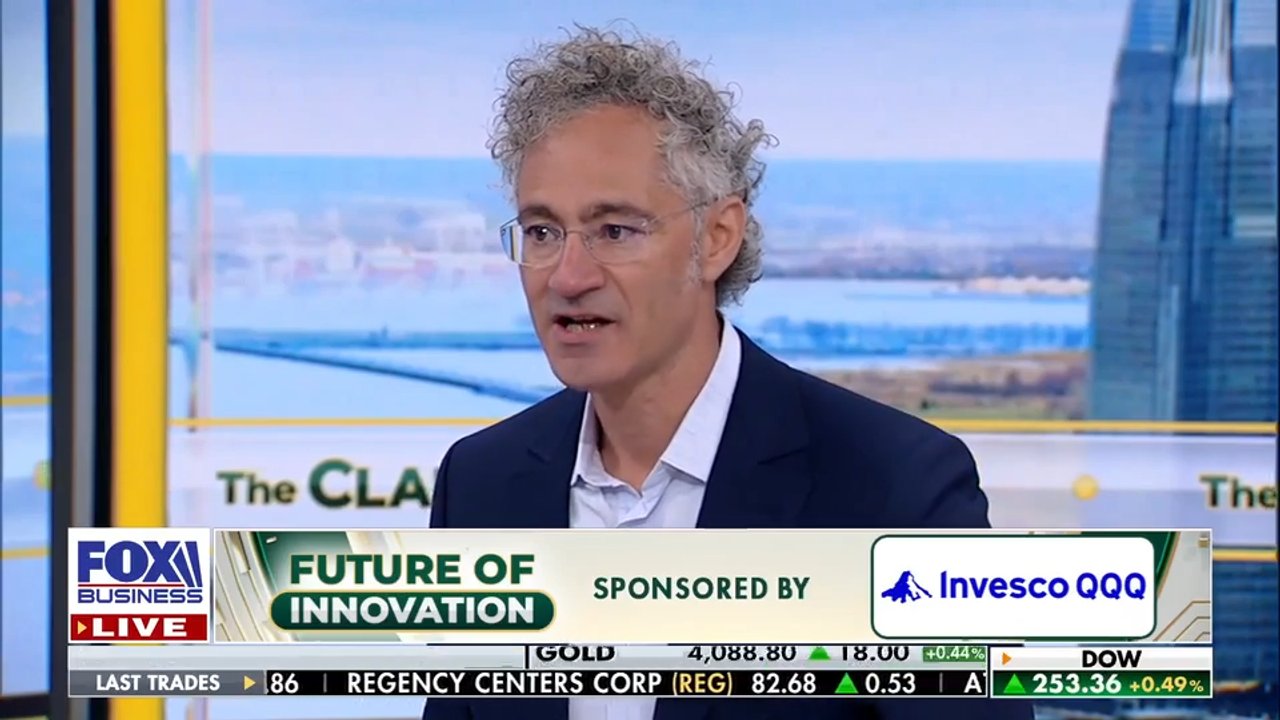
Palantir CEO Alex Karp discusses open-weight artificial intelligence models, how he believes the technology should be regulated and why the U.S. should avoid Europe’s approach on ‘The Claman Countdown.’
Palantir CEO Alex Karp warned the United States against adopting Europe’s intense regulatory framework for artificial intelligence amid a domestic battle over open models on "The Claman Countdown."
Karp said Europe offers a cautionary tale for U.S. policymakers as the Trump administration weighs how to regulate rapidly advancing AI technology.
"We have a template for what doesn't work. It's called Europe," Karp said Monday. "Our business is booming in America… Europe is like trying to find ways to keep companies like Palantir out."
"I've watched Europe regulate itself out of business. You end up with businesses that no one believes are businesses because they only exist behind the firewall of regulation."
OPENAI DIDN’T REALIZE ITS AGENT WAS RESPONSIBLE FOR HACK FOR A WEEK: REPORT
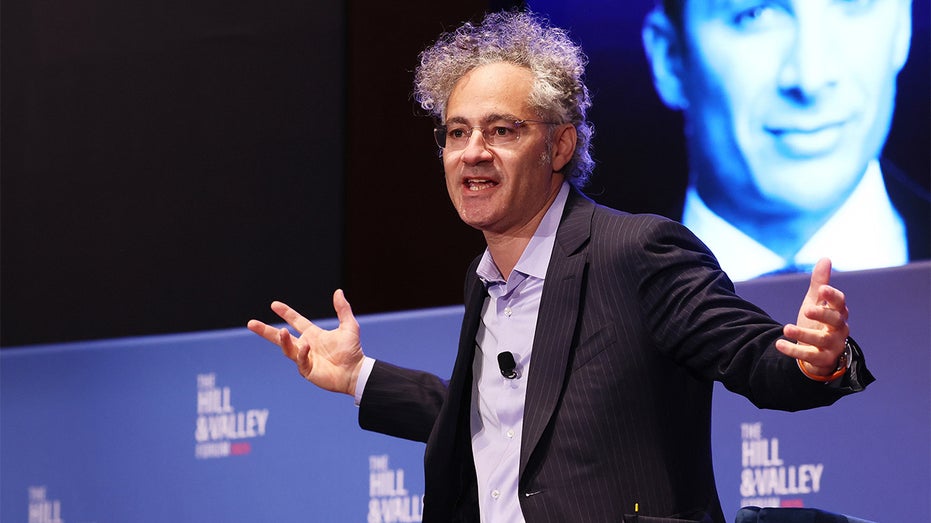
Co-founder and CEO for Palantir Technologies Alex Karp speaks onstage during Jacob Helberg at the Hill & Valley Forum 2025 on April 30, 2025, in Washington, DC. (Jemal Countess/Getty Images for Jacob Helberg / Getty Images)
His comments come after Palantir urged the Trump administration not to ban open-weight AI models and as Treasury Secretary Scott Bessent raises concerns that Chinese-made open AI models could be built using technology from U.S. laboratories.
"This revolution has taken off, and you can't put it back in the bag," Karp said.
The Palantir CEO argued that open-weight AI models are optimal for the tech giant’s customers, saying they sometimes perform even better than frontier models.
Karp said he is not opposed to closed AI models but is focused on meeting customer demand.
He said many Palantir clients are "enraged" because they feel they have become "token maxed" – a term he used to describe customers frustrated by paying for AI tokens without receiving enough business value in return.

Karp rejected both over regulation and under regulation of AI, and said the U.S. must strike a balance that encourages innovation while also addressing dangers. (Rafael Henrique/SOPA Images/LightRocket via Getty Images / Getty Images)
Karp said the biggest obstacle to AI adoption is not fear of foreign competition, but rather businesses questioning whether AI investments deliver enough value.
"What slows down AI adoption in this country is people are saying, ‘But I can't use these products because I'm not getting value… or I'm transferring the value of my business to someone else,’" he said.
OPENAI CO-FOUNDER WARNS AI MODELS ARE BECOMING HARDER TO CONTROL AFTER ITS MODEL HACKED ANOTHER FIRM
"They want to make sure that they can use that model in a way that it's valuable, and that they make sure the value of their business is not being monetized."
Palantir, co-founded by Karp, moved its headquarters from Denver to Miami in February as many corporations and billionaires seek the friendlier tax environment of Florida.
As Bessent pushes for regulation of artificial intelligence, Karp said it is important to keep winning in mind as the international AI arms race intensifies, with China scaling as a major competitor.
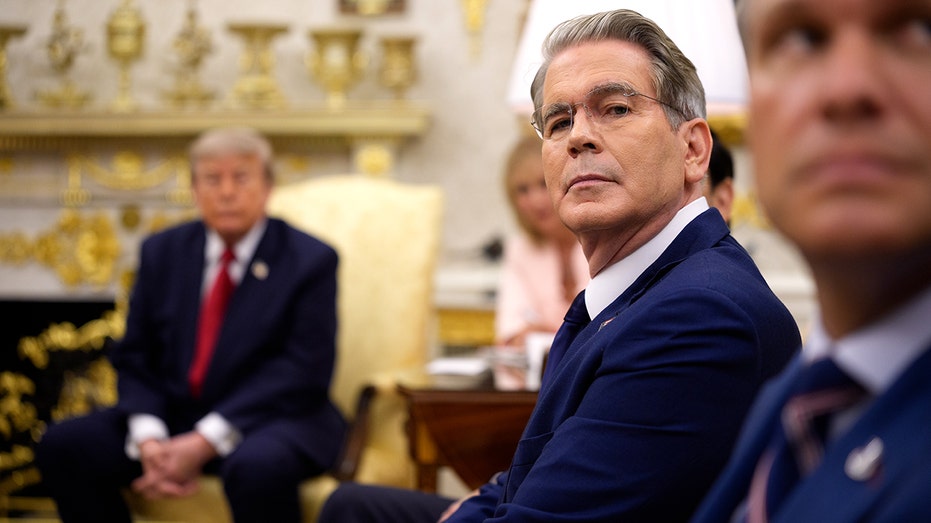
Treasury Secretary Scott Bessent attends a meeting with President Donald Trump and other Cabinet members. (Andrew Harnik/Getty Images / Getty Images)
"We are going to end up having to regulate AI, there's no doubt, but the question is: Who regulates it, do they understand what they're doing, and is it regulated in a way where we win?" Karp told FOX Business.
Karp rejected both over regulation and under regulation of AI, and said the U.S. must strike a balance that encourages innovation while also addressing dangers.
GET FOX BUSINESS ON THE GO BY CLICKING HERE
"There's like you have hard regulation, which is Europe, that clearly doesn't work. Then you have no regulation. Obviously, I'm not in favor of that," he said.
"These are very complicated issues, and there's only one country in the world that could get it right or really get it wrong, and that's us. But because it could go either way, [it] doesn't mean we shouldn't plow forward and try to get this to work."


